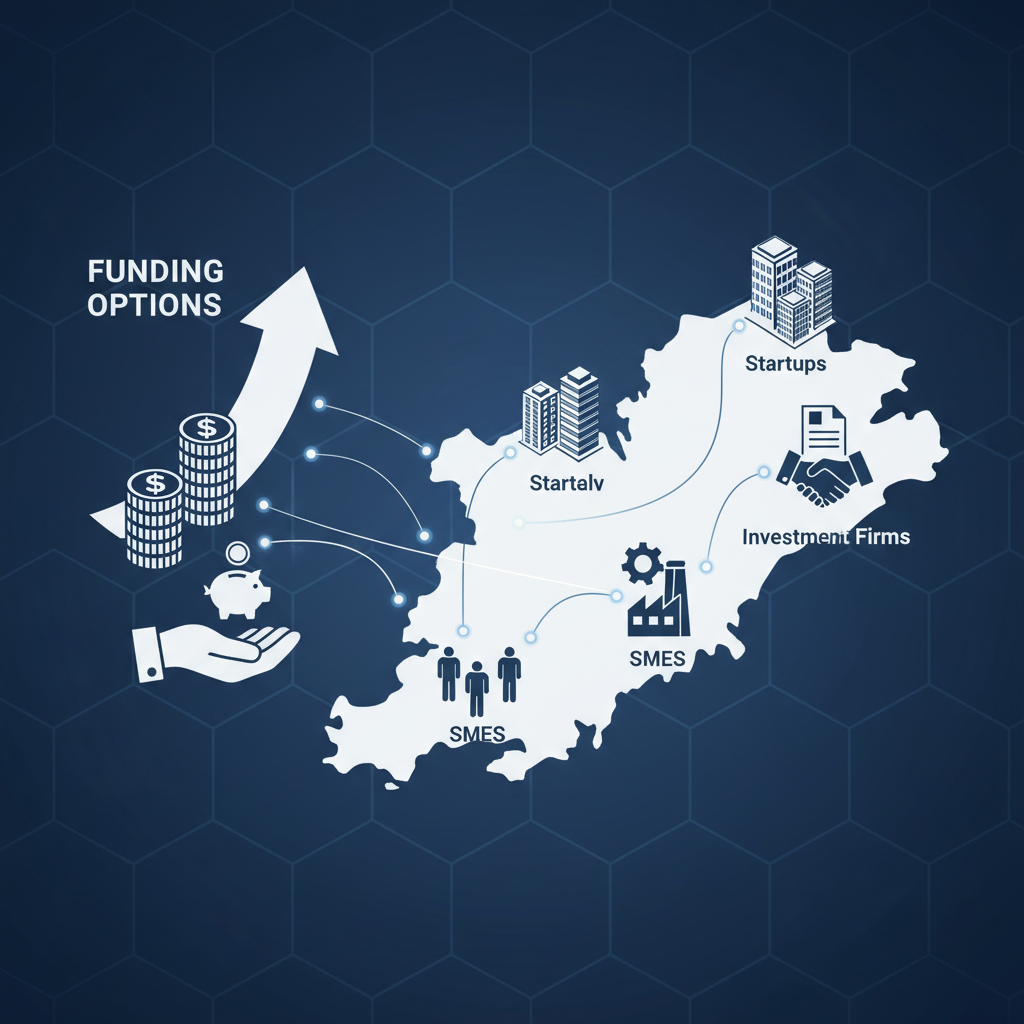
Unlocking Growth: Government Grants and Subsidies for Small Businesses in Dubai (UAE)
Dubai, a global hub for business and innovation, offers a robust ecosystem for small and medium-sized enterprises (SMEs). This article explores the various government grants, subsidies, and support programs available to small businesses in Dubai, detailing eligibility, application processes, and strategic advantages. Entrepreneurs can leverage these initiatives to foster growth, reduce operational costs, and enhance their competitive edge in the dynamic UAE market.

Unlocking Growth: Government Grants and Subsidies for Small Businesses in Dubai (UAE)
Dubai's strategic vision to diversify its economy and establish itself as a leading global business hub has led to significant governmental support for small and medium-sized enterprises (SMEs). Recognising SMEs as the backbone of economic growth, job creation, and innovation, the UAE government, particularly in Dubai, has implemented a range of grants, subsidies, and support programmes designed to foster their development. For entrepreneurs looking to establish or expand their ventures in this vibrant emirate, understanding and leveraging these initiatives can be a critical factor in achieving sustainable success. This comprehensive guide delves into the landscape of government assistance available to small businesses in Dubai, outlining key programmes, eligibility criteria, application processes, and strategic considerations.
The Strategic Importance of SMEs in Dubai's Economy
SMEs contribute significantly to Dubai's Gross Domestic Product (GDP), employment, and non-oil trade. The Dubai SME, an agency of the Department of Economic Development (DED), reports that SMEs account for approximately 95% of all companies in Dubai, employing 42% of the workforce and contributing around 40% to the emirate's GDP. This profound impact underscores the government's commitment to nurturing a conducive environment for their growth. Government support extends beyond financial aid, encompassing mentorship, incubation services, access to markets, and regulatory frameworks designed to ease business operations.
Dubai's Vision for SME Development
Dubai's leadership has consistently articulated a vision for an innovation-driven, knowledge-based economy. SMEs are central to this vision, particularly those in high-growth sectors such as technology, green economy, healthcare, education, and creative industries. The government's initiatives are often tailored to encourage investment and innovation in these strategic areas, aligning with broader national agendas like the UAE Vision 2021 and Dubai Plan 2021, and more recently, the Dubai Economic Agenda D33, which aims to double Dubai's economy and establish it as one of the top three global cities.
Key Government Grants and Support Programs for Small Businesses
While direct cash grants for general operational expenses are less common in Dubai compared to some Western economies, the government provides substantial indirect subsidies, preferential treatments, and targeted funding mechanisms. These often come in the form of reduced fees, incubation support, access to specialised funds, and export promotion schemes.
1. Dubai SME and Mohammed Bin Rashid Establishment for SME Development (MBRFE)
Dubai SME, under the Department of Economy and Tourism (DET), is the primary governmental body dedicated to supporting local entrepreneurs and SMEs. It offers a suite of services, including:
- Financial Support: While not direct grants, Dubai SME facilitates access to funding through partnerships with financial institutions. This includes loan schemes with favourable terms, often backed by the government, and venture capital matching programmes. The Dubai SME Fund is a notable initiative aimed at providing capital to promising Emirati-owned SMEs.
- Incubation and Mentorship: Dubai SME operates several incubators and accelerators, providing subsidised office space, shared facilities, and critical business support services. These programmes often include mentorship from industry experts, legal and accounting advice, and networking opportunities. Examples include the Dubai Future Accelerators and various free zone incubators.
- Market Access and Development: Dubai SME helps businesses connect with larger corporations and government entities through procurement programmes that prioritise local SMEs. They also organise trade missions, exhibitions, and B2B matchmaking events to help SMEs expand their customer base and explore new markets.
- Training and Development: Subsidised training programmes are offered to enhance entrepreneurial skills, covering areas such as business planning, marketing, financial management, and digital transformation.
Eligibility: Typically, these programmes are primarily geared towards Emirati-owned businesses. However, many incubation and mentorship programmes are open to expatriate-owned businesses, especially those in innovative sectors or free zones, albeit with varying levels of financial support.
2. Free Zone Incentives and Subsidies
Dubai's numerous free zones are a cornerstone of its business environment, offering attractive incentives that act as indirect subsidies. While not grants in the traditional sense, these benefits significantly reduce the cost of doing business and enhance profitability.
- Tax Exemptions: Free zones offer 0% corporate and personal income tax, and often 0% import and export duties. This is a substantial financial benefit, effectively a permanent subsidy on profits.
- 100% Foreign Ownership: Unlike mainland companies, free zone entities can be 100% foreign-owned, eliminating the need for a local sponsor and associated costs or profit-sharing arrangements.
- Repatriation of Capital and Profits: Businesses can repatriate 100% of their capital and profits without currency restrictions.
- Reduced Setup Costs: Many free zones offer competitive licensing fees, subsidised office solutions (flexi-desks, co-working spaces), and simplified registration processes. Some free zones, like Dubai Internet City or Dubai Media City, offer specific packages for startups and SMEs, including discounted licenses for a limited period.
- Sector-Specific Support: Free zones often specialise in particular industries (e.g., Dubai Healthcare City, Dubai Silicon Oasis, Dubai International Financial Centre). They provide tailored infrastructure, regulatory environments, and networking opportunities relevant to their sector, which can be invaluable for specialised SMEs.
Eligibility: Each free zone has its own specific requirements, but generally, businesses must operate within the free zone's permitted activities. Expatriate entrepreneurs are the primary beneficiaries of these free zone structures.
3. Innovation and Technology Funds
Dubai is keen to position itself as a global innovation hub. Several initiatives support tech startups and innovative SMEs:
- Mohammed Bin Rashid Al Maktoum Global Initiatives (MBRGI): While MBRGI focuses on humanitarian and development work, some of its sub-initiatives or partnerships may offer grants or support for social enterprises and innovative projects that align with its goals.
- Dubai Future Foundation (DFF): DFF spearheads initiatives like Dubai Future Accelerators, which connects startups with government entities to co-create solutions for future challenges. While not direct grants, selected startups receive funding, mentorship, and access to government resources to develop and pilot their innovations.
- Financing for Green Technologies: With a strong emphasis on sustainability, entities like the Dubai Electricity and Water Authority (DEWA) and the Dubai Green Fund may offer financing or incentives for SMEs developing or implementing green technologies and sustainable solutions.
Eligibility: Highly competitive, requiring innovative business models, strong growth potential, and alignment with Dubai's strategic innovation priorities.
4. Export and Trade Promotion Schemes
For SMEs looking to expand internationally, Dubai provides support to facilitate export activities.
- Dubai Exports: An agency of Dubai's Department of Economy and Tourism, Dubai Exports helps local businesses access international markets. It offers market intelligence, export readiness assessments, trade finance advisory, and participation in international trade shows and missions, often at subsidised rates.
- Customs Duty Exemptions: For certain goods or re-export activities, businesses can benefit from customs duty exemptions or refunds, reducing the cost of international trade.
Eligibility: Businesses must be registered in Dubai and demonstrate export potential. Specific criteria apply for participation in trade missions or accessing advisory services.
Application Processes and Key Considerations
Navigating the landscape of government support requires diligence and strategic planning.
1. Research and Identification
The first step is to thoroughly research available programmes and identify those that align with your business type, sector, and growth stage. Websites of Dubai SME, various free zones, the Department of Economy and Tourism, and the Dubai Future Foundation are excellent starting points.
2. Eligibility Assessment
Carefully review the eligibility criteria for each programme. Factors often include business ownership (Emirati vs. expatriate), sector, innovation level, business plan viability, and financial projections. For financial support, a robust business plan demonstrating sustainability and growth potential is crucial.
3. Documentation and Application
Prepare all required documentation meticulously. This typically includes:
- Business license and registration documents
- Detailed business plan (including market analysis, financial projections, management team details)
- Company profile and pitch deck
- Financial statements (for existing businesses)
- Proof of innovation or unique selling proposition (for tech/innovation grants)
Applications are usually submitted online through the respective government agency's portal. The process can be competitive and may involve multiple stages, including interviews and presentations.
4. Timelines and Costs
Application timelines vary significantly, from a few weeks for free zone setups to several months for competitive innovation funds. While direct application fees for grants are rare, there might be administrative costs for certifications, legal advice, or business plan preparation. The primary 'cost' is often the time and effort invested in preparing a compelling application.
5. Compliance and Reporting
Beneficiaries of government support are typically required to adhere to specific reporting and compliance standards. This might include regular progress reports, financial audits, and adherence to programme-specific milestones. Non-compliance can lead to withdrawal of support or penalties.
Conclusion
Dubai offers a dynamic and supportive environment for small businesses, underpinned by a government keenly aware of the sector's economic importance. While direct cash grants for general operations are less prevalent, the emirate provides a wealth of indirect subsidies, preferential treatments, and targeted funding mechanisms through entities like Dubai SME, its numerous free zones, and innovation-focused foundations. For entrepreneurs, strategically leveraging these resources – from tax exemptions and subsidised incubation to market access and export promotion – can significantly reduce operational costs, accelerate growth, and enhance competitiveness. Success hinges on thorough research, meticulous application, and a clear understanding of the eligibility criteria and strategic objectives of each programme. By tapping into these governmental initiatives, small businesses in Dubai can not only thrive but also contribute meaningfully to the emirate's ambitious economic vision, solidifying its status as a global business powerhouse.