
United States Company Formation: A Comprehensive Guide to Business Entities
Navigating the landscape of U.S. company formation requires a deep understanding of various business entities. This guide provides an in-depth look at the most common structures, their legal implications, tax treatments, and operational considerations, empowering entrepreneurs to make informed decisions.
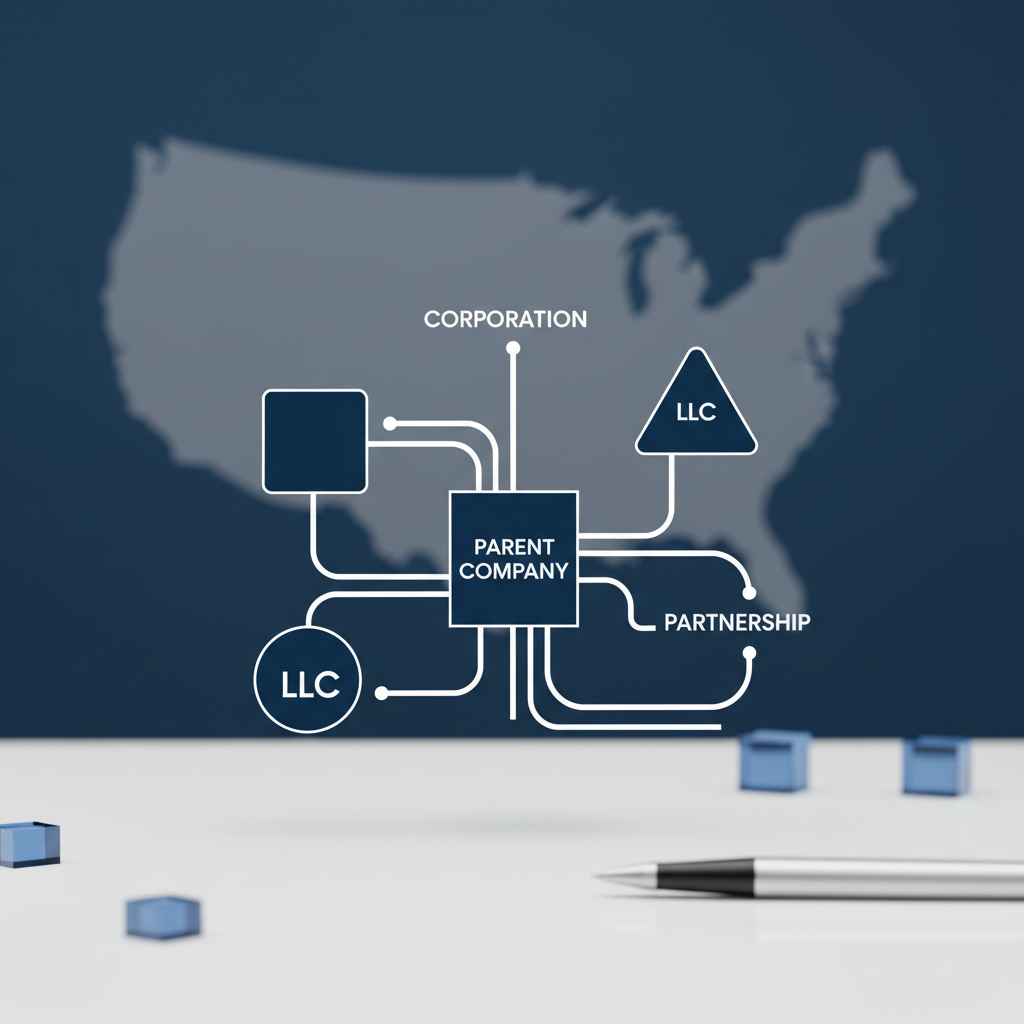
United States Company Formation: A Comprehensive Guide to Business Entities
The United States offers a dynamic and robust environment for business formation, attracting entrepreneurs from across the globe. However, selecting the appropriate legal structure for your business is a critical initial step that can significantly impact liability, taxation, operational flexibility, and future growth. This comprehensive guide delves into the primary types of business entities available in the U.S., outlining their characteristics, advantages, disadvantages, and suitability for various entrepreneurial ventures.
Understanding the Core Business Structures
The choice of business entity is not merely an administrative formality; it is a foundational decision with long-term implications. The most common business structures in the U.S. include Sole Proprietorships, Partnerships (General and Limited), Limited Liability Companies (LLCs), and Corporations (S-Corp and C-Corp). Each offers a unique balance of liability protection, tax treatment, administrative burden, and ownership flexibility.
Sole Proprietorship
A sole proprietorship is the simplest and most common form of business organization. It is an unincorporated business owned and run by one individual, with no legal distinction between the owner and the business. This structure is often chosen by independent contractors, consultants, and small business owners due to its ease of setup and minimal ongoing compliance requirements.
Key Characteristics:
- Ease of Formation: Requires minimal paperwork; often just obtaining necessary licenses and permits.
- Control: The owner has complete control over all business decisions.
- Taxation: Business income and losses are reported on the owner's personal income tax return (Schedule C, Form 1040). The business itself is not taxed separately.
- Liability: The owner is personally liable for all business debts and obligations, meaning personal assets are at risk.
Pros: Simplicity, low setup costs, direct control, easy dissolution. Cons: Unlimited personal liability, difficulty in raising capital, limited continuity if the owner dies or becomes incapacitated.
Partnerships
A partnership involves two or more individuals who agree to share in the profits or losses of a business. Partnerships are typically governed by a partnership agreement, which outlines responsibilities, profit-sharing ratios, and dispute resolution mechanisms. There are several types of partnerships, with General Partnerships (GPs) and Limited Partnerships (LPs) being the most prevalent.
General Partnership (GP):
- Formation: Relatively easy to form, often based on an oral or written agreement.
- Taxation: Pass-through taxation, similar to a sole proprietorship, where profits and losses are passed through to the partners' personal tax returns (Form 1065).
- Liability: All partners share in the management and are personally liable for the business's debts and obligations.
Limited Partnership (LP):
- Structure: Comprises at least one general partner and one or more limited partners.
- General Partner: Manages the business and has unlimited personal liability.
- Limited Partner: Contributes capital but does not participate in day-to-day management; their liability is limited to their investment.
- Suitability: Often used for real estate ventures or investment funds where some partners provide capital without management responsibilities.
Pros (General): Relatively easy to form, shared workload and resources, pass-through taxation. Cons (General): Unlimited personal liability for general partners, potential for partner disputes, difficulty in transferring ownership.
The Rise of Hybrid Structures: LLCs and Corporations
As businesses grew in complexity and the need for liability protection became paramount, hybrid structures emerged, offering a balance between the simplicity of sole proprietorships/partnerships and the liability protection of corporations.
Limited Liability Company (LLC)
The LLC has become the most popular business entity for many small to medium-sized businesses due to its flexibility and balance of liability protection and tax advantages. It combines the limited liability of a corporation with the pass-through taxation of a sole proprietorship or partnership.
Key Characteristics:
- Formation: Requires filing Articles of Organization with the relevant state authority.
- Liability: Owners (members) have limited personal liability for business debts and lawsuits, protecting personal assets.
- Taxation: Default tax treatment is pass-through (like a sole proprietorship if one owner, or partnership if multiple owners). However, an LLC can elect to be taxed as an S-Corporation or a C-Corporation, offering significant tax planning flexibility.
- Management: Can be member-managed (all members participate) or manager-managed (appointed managers run the business).
- Operational Agreement: An operating agreement, though not always legally required, is highly recommended to define ownership percentages, responsibilities, and decision-making processes.
Pros: Limited personal liability, flexible taxation options, less administrative burden than corporations, flexible management structure. Cons: Can be more complex to set up than a sole proprietorship, some states impose annual fees, ownership transfer can be more complex than a corporation.
Corporations (C-Corp and S-Corp)
Corporations are legally distinct entities from their owners (shareholders), offering the strongest form of liability protection. They are more complex to establish and maintain but provide significant advantages for businesses looking to raise substantial capital, offer employee stock options, or eventually go public.
C-Corporation (C-Corp):
- Formation: Requires filing Articles of Incorporation with the state, appointing a board of directors, and issuing stock.
- Liability: Shareholders have limited liability, protected from business debts and lawsuits.
- Taxation: Subject to


