Starting a Business in Luxembourg: The Complete Entrepreneur's Guide
Luxembourg, a global financial hub and a gateway to the European market, offers a compelling environment for entrepreneurs. This comprehensive guide details the essential steps, legal requirements, and strategic considerations for establishing a successful business in the Grand Duchy.

Starting a Business in Luxembourg: The Complete Entrepreneur's Guide
Luxembourg, a small but mighty nation at the heart of Europe, has long been recognised as a premier destination for international business and investment. Its strategic location, stable economy, highly skilled multilingual workforce, and supportive regulatory framework make it an attractive proposition for entrepreneurs looking to establish a foothold in the European market. This guide provides a detailed overview of the process, regulations, and key considerations for starting a business in the Grand Duchy.
Why Choose Luxembourg for Your Business?
Luxembourg’s appeal stems from several critical factors that foster a pro-business environment. Firstly, its political and economic stability provides a secure foundation for long-term growth. The country boasts one of the highest GDP per capita globally, driven by a robust financial sector, burgeoning technology industries, and a diversified economy. Secondly, its strategic location, bordering Belgium, France, and Germany, offers unparalleled access to a consumer market of over 500 million people within the European Union. This makes it an ideal hub for logistics, e-commerce, and international trade.
Furthermore, Luxembourg actively promotes innovation and entrepreneurship. The government has implemented various initiatives and funding programmes to support startups and SMEs, particularly in sectors like FinTech, BioHealth, and Space Resources. The country's advanced digital infrastructure, including high-speed internet connectivity and data centres, further enhances its attractiveness for tech-driven businesses. The multilingual workforce, proficient in English, French, German, and Luxembourgish, simplifies international communication and operations.
Key Advantages:
- Economic Stability: A strong, diversified economy with high GDP per capita.
- Strategic Location: Central to Europe, offering market access to the entire EU.
- Supportive Ecosystem: Government initiatives, incubators, and funding for startups.
- Skilled Workforce: Highly educated and multilingual talent pool.
- Favourable Tax Regime: Competitive corporate tax rates and an extensive network of double taxation treaties.
- Regulatory Efficiency: Streamlined administrative procedures for business setup.
Legal Structures and Registration Process
Choosing the right legal structure is a foundational decision that impacts liability, taxation, and administrative requirements. Luxembourg offers several common business forms, each with distinct characteristics.
Common Legal Structures:
- Société à responsabilité limitée (S.à r.l.) – Limited Liability Company: This is the most popular choice for SMEs due to its flexibility and limited liability for shareholders. It requires a minimum share capital of €12,000, fully paid up at incorporation. Management is typically by one or more managers, who may or may not be shareholders.
- Société Anonyme (S.A.) – Public Limited Company: Suitable for larger businesses or those planning to raise capital from the public. It requires a minimum share capital of €30,000, with at least 25% paid up at incorporation. It offers greater flexibility in share transfer and governance, often involving a board of directors.
- Société en Commandite Simple (SCS) – Simple Limited Partnership: Involves at least one general partner with unlimited liability and one or more limited partners whose liability is restricted to their capital contribution.
- Société en Commandite Spéciale (SCSp) – Special Limited Partnership: A more flexible partnership structure, often used for investment funds, with no legal personality and significant contractual freedom.
- Sole Proprietorship (Entreprise Individuelle): Simplest form, where the individual and the business are legally one entity, meaning unlimited personal liability. Suitable for small-scale operations or freelancers.
Registration Steps:
- Business Permit Application: Before commencing any commercial, artisanal, or liberal activity, a business permit (autorisation d'établissement) must be obtained from the Ministry of the Economy. This permit assesses the applicant's professional integrity and qualifications. For legal entities, it's typically issued to the managing director or a qualified representative.
- Notarisation of Articles of Association: For S.à r.l. and S.A. companies, the articles of association must be drawn up and notarised by a Luxembourg notary. This involves providing details of shareholders, share capital, company name, registered office, and business purpose.
- Opening a Bank Account: A local bank account is required to deposit the share capital. Luxembourgish banks are highly reputable and offer a wide range of corporate services.
- Registration with the Trade and Companies Register (RCS): The company must be registered with the RCS within one month of its incorporation. This makes the company's legal existence public.
- Tax Registration: Registration with the Luxembourg Inland Revenue (Administration des Contributions Directes – ACD) for corporate income tax and municipal business tax, and with the Registration Duties, Estates and VAT Authority (Administration de l'Enregistrement, des Domaines et de la TVA – AED) for VAT.
- Social Security Affiliation: Employers must register their company and employees with the Joint Social Security Centre (Centre Commun de la Sécurité Sociale – CCSS).
Tax and Compliance Landscape
Luxembourg's tax system is competitive and designed to attract international businesses. Understanding the key taxes and compliance obligations is crucial for effective financial planning.
Key Taxes:
- Corporate Income Tax (CIT): The standard corporate income tax rate for companies with taxable income exceeding €200,000 is 17%. An additional 7% solidarity surcharge applies, bringing the effective CIT rate to 18.19%. For companies with taxable income between €175,001 and €200,000, the rate is €26,250 plus 31% of the income exceeding €175,000. For taxable income up to €175,000, the rate is 15% plus the solidarity surcharge.
- Municipal Business Tax (MBT): This local tax varies by municipality, with the rate in Luxembourg City being 6.75%. The MBT is deductible for CIT purposes.
- Net Wealth Tax (NWT): An annual tax levied on the unitary value of a company's net assets. For companies with net wealth exceeding €500 million, the rate is 0.5%. For companies with net wealth up to €500 million, the rate is 0.05% with a minimum of €4,815.
- Value Added Tax (VAT): The standard VAT rate is 17%, one of the lowest in the EU. Reduced rates of 14%, 8%, and 3% apply to specific goods and services.
Compliance and Reporting:
Companies in Luxembourg are subject to various compliance requirements, including annual financial statement filings, tax declarations, and potentially audit obligations depending on size and legal form. It is highly recommended to engage local legal and accounting professionals to ensure full compliance with Luxembourgish laws and regulations. Luxembourg has adopted international standards such as BEPS (Base Erosion and Profit Shifting) and ATAD (Anti-Tax Avoidance Directive), requiring businesses to be aware of transfer pricing rules and substance requirements.
Funding and Support for Entrepreneurs
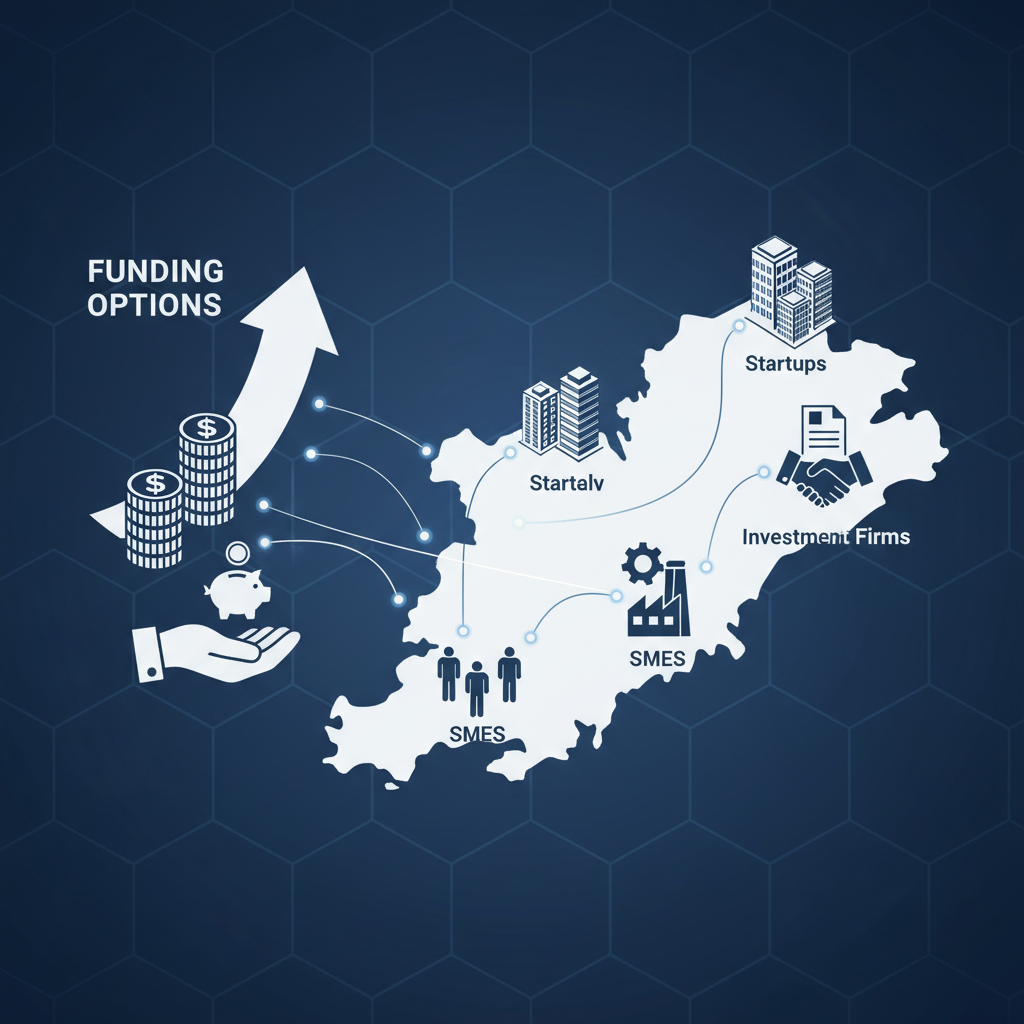
Luxembourg offers a dynamic ecosystem of support for entrepreneurs, ranging from government grants to private funding opportunities.
Government Support and Initiatives:
- Luxinnovation: The national agency for innovation and research, Luxinnovation, provides comprehensive support to companies, from R&D assistance to internationalisation strategies. They offer guidance on various national and European funding programmes.
- Ministry of the Economy: Offers several aid schemes for SMEs, including investment aid, R&D aid, and innovation aid, designed to stimulate economic development and job creation.
- Startup Luxembourg: A government initiative promoting the Luxembourg startup ecosystem, connecting entrepreneurs with investors, mentors, and resources.
- SNCI (Société Nationale de Crédit et d'Investissement): A public banking institution that provides medium and long-term financing to Luxembourgish companies, including investment loans, innovation loans, and startup loans.
Private Funding and Incubators:
Luxembourg has a growing venture capital and private equity scene. Numerous private investors, family offices, and venture capital firms are actively looking for promising startups. Additionally, several incubators and accelerators provide mentorship, office space, and networking opportunities:
- Technoport: A technology business incubator that supports innovative projects and startups.
- Luxembourg House of Financial Technology (LHoFT): A public-private initiative driving FinTech innovation and connecting startups with the financial services industry.
- Luxembourg-City Incubator (LCI): Supports startups in various sectors, providing a collaborative environment and resources.
Conclusion
Starting a business in Luxembourg presents a compelling opportunity for entrepreneurs seeking a stable, strategically located, and supportive environment. While the process involves navigating specific legal and administrative requirements, the Grand Duchy's robust economy, skilled workforce, and pro-business policies significantly mitigate potential challenges. By carefully selecting the appropriate legal structure, understanding the tax landscape, and leveraging the extensive support systems available, entrepreneurs can successfully establish and grow their ventures, positioning themselves for success within Europe and beyond. Engaging with local experts for legal, tax, and accounting advice is paramount to ensuring a smooth and compliant setup process, allowing businesses to fully capitalise on Luxembourg's unique advantages.