
Opening a Holding Company in Spain: Benefits, Process, and Strategic Advantages
This comprehensive article explores the strategic advantages and detailed process of establishing a holding company in Spain. It delves into the significant tax benefits, regulatory framework, and practical steps for entrepreneurs and international businesses looking to optimize their corporate structure and expand into the European market.
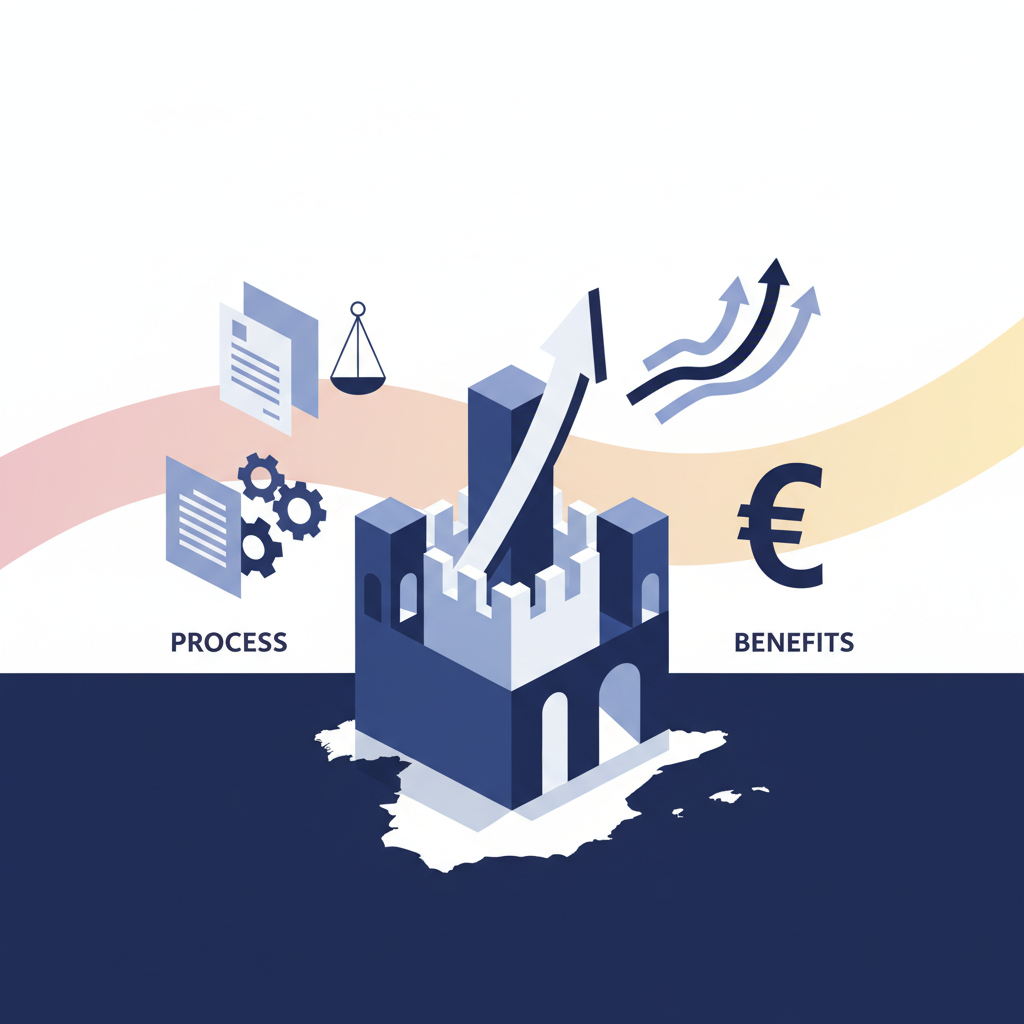
Introduction: The Strategic Appeal of a Spanish Holding Company
Spain, with its strategic location, robust legal framework, and attractive tax incentives, has emerged as a compelling jurisdiction for establishing holding companies. For international businesses and entrepreneurs seeking to optimize their corporate structure, manage diverse investments, and expand their footprint within the European Union and Latin America, a Spanish holding company offers a suite of advantages. This article will meticulously explore the benefits, regulatory landscape, and the step-by-step process of setting up a holding company in Spain, providing a clear roadmap for prospective investors.
A holding company, fundamentally, is a parent corporation that owns enough voting stock in other companies (subsidiaries) to control their policies and management. It typically does not produce goods or services itself but rather holds assets, which can include shares in other companies, intellectual property, or real estate. In Spain, the most common legal forms for holding companies are the Sociedad Limitada (S.L.) or Sociedad Anónima (S.A.), with the S.L. being favored for its simplicity and lower capital requirements for smaller and medium-sized enterprises.
Key Benefits of Establishing a Holding Company in Spain
Establishing a holding company in Spain presents several compelling benefits, primarily centered around tax efficiency, legal protection, and operational flexibility.
1. Favorable Tax Regime: The Participation Exemption
One of the most significant attractions of a Spanish holding company is its highly advantageous tax regime, particularly the participation exemption. This regime is designed to prevent double taxation on dividends and capital gains derived from qualifying participations in subsidiaries.
-
Exemption on Dividends: Under the Spanish participation exemption regime, dividends received by a Spanish holding company from its subsidiaries, whether Spanish or foreign, are largely exempt from corporate income tax (Impuesto sobre Sociedades – IS). To qualify, the Spanish holding company must hold at least 5% of the subsidiary's share capital for an uninterrupted period of at least one year. Furthermore, the subsidiary must be subject to a tax similar to Spain's corporate income tax at a minimum rate of 10% (this condition is often met by most foreign companies). This exemption can reduce the effective tax rate on dividend income to virtually zero.
-
Exemption on Capital Gains: Similarly, capital gains derived from the sale of qualifying participations in subsidiaries are also exempt from corporate income tax in Spain, provided the same conditions for dividend exemption are met. This makes Spain an excellent jurisdiction for managing and divesting investments without incurring significant tax liabilities on capital appreciation.
-
No Withholding Tax on Outgoing Dividends (EU/EEA): For distributions from the Spanish holding company to its parent company located within the EU or EEA, the EU Parent-Subsidiary Directive often eliminates withholding taxes, further enhancing tax efficiency across the corporate structure. For distributions outside the EU/EEA, Spain's extensive network of Double Taxation Treaties (DTTs) can significantly reduce or eliminate withholding taxes.
2. Legal and Operational Advantages
Beyond tax benefits, Spanish holding companies offer robust legal and operational advantages:
-
Asset Protection: By centralizing ownership of various assets and subsidiaries under a single holding entity, a Spanish holding company can provide a layer of protection against operational risks and liabilities associated with individual business units. This separation of legal entities helps to ring-fence assets.
-
Consolidation and Management: A holding company structure simplifies the management and oversight of multiple subsidiaries. It allows for centralized strategic planning, financial management, and resource allocation across the group, leading to greater efficiency and synergy.
-
Access to EU Markets: As an EU member state, Spain provides a stable and predictable legal and economic environment. A Spanish holding company facilitates easier access to the vast European single market, benefiting from free movement of capital, goods, services, and people.
-
Reputation and Credibility: Operating from a reputable EU jurisdiction like Spain can enhance a company's international credibility and facilitate access to financing and partnerships.
The Process of Opening a Holding Company in Spain
Establishing a holding company in Spain involves several key steps, requiring careful planning and adherence to Spanish corporate law. While the process can be streamlined with professional assistance, understanding each stage is crucial.
1. Preliminary Steps and Planning
-
Choose the Legal Form: The most common choices are Sociedad Limitada (S.L.) or Sociedad Anónima (S.A.). For most holding structures, especially those not seeking public capital, an S.L. is preferred due to its simpler formation, lower minimum capital (€3,000 fully paid up), and less stringent compliance requirements compared to an S.A. (€60,000, 25% paid up).
-
Name Reservation: Obtain a Certificate of Uniqueness (Certificado de Denominación Social) from the Central Mercantile Register (Registro Mercantil Central) to ensure the chosen company name is unique and available. This typically takes 1-3 working days.
-
Obtain a Foreigner Identification Number (NIE): All non-resident directors, shareholders, and beneficial owners will need a NIE for identification purposes. This can be obtained at Spanish consulates abroad or police stations in Spain.
2. Company Formation and Registration
-
Open a Bank Account: A Spanish bank account must be opened in the company's name to deposit the minimum share capital. The bank will issue a certificate of deposit.
-
Draft the Articles of Association (Estatutos Sociales): These are the foundational documents of the company, outlining its purpose, share capital, management structure, and operational rules. They must be drafted in accordance with Spanish corporate law.
-
Sign the Public Deed of Incorporation: The founders (or their legal representatives with powers of attorney) must sign the Public Deed of Incorporation (Escritura Pública de Constitución) before a Spanish Notary Public. This deed formalizes the company's creation and includes the Articles of Association, capital deposit certificate, and details of shareholders and directors.
-
Obtain a Provisional Tax Identification Number (NIF): Immediately after signing the deed, the company must apply for a provisional NIF from the Spanish Tax Agency (Agencia Tributaria). This allows the company to begin operations and fulfill tax obligations.
-
Register with the Mercantile Register: The Public Deed of Incorporation must be filed with the Provincial Mercantile Register (Registro Mercantil Provincial) where the company's registered office is located. This step officially registers the company and makes it a legal entity. This process can take several weeks.
-
Obtain a Definitive NIF: Once registered with the Mercantile Register, the company can apply for its definitive NIF from the Tax Agency.
3. Ongoing Compliance and Administration
-
Tax Compliance: The holding company must comply with Spanish corporate income tax (IS) regulations, file annual tax returns, and potentially other declarations depending on its activities. Leveraging the participation exemption requires careful documentation and adherence to conditions.
-
Accounting and Auditing: Maintain proper accounting records in accordance with Spanish Generally Accepted Accounting Principles (GAAP). Depending on size and activity, the company may be subject to annual audits.
-
Annual General Meetings: Hold annual general meetings of shareholders to approve financial statements and make key corporate decisions.
-
Director Responsibilities: Directors must fulfill their fiduciary duties, ensuring the company operates within legal and ethical bounds.
Costs and Timelines
The costs associated with setting up a Spanish holding company typically include:
- Notary Fees: Based on the share capital and complexity of the deed.
- Mercantile Register Fees: For registration and publication.
- Legal and Advisory Fees: For drafting documents, legal advice, and managing the process. These can range from €2,000 to €5,000+ depending on the firm and complexity.
- Minimum Share Capital: €3,000 for an S.L.
- Translation Costs: If documents are not in Spanish.
The timeline for establishing a holding company can range from 4 to 8 weeks, depending on the efficiency of obtaining necessary documents (like NIEs), notary availability, and the processing times of the Mercantile Register and Tax Agency. Expedited services are sometimes available but incur additional costs.
Conclusion
Spain offers a highly attractive environment for establishing a holding company, particularly for businesses seeking to benefit from a robust participation exemption regime on dividends and capital gains. The strategic advantages extend beyond tax efficiency to include enhanced asset protection, streamlined group management, and privileged access to the expansive European market. While the process involves several distinct legal and administrative steps, navigating it with the guidance of experienced legal and tax professionals can ensure a smooth and compliant setup. For international investors and multinational corporations, a Spanish holding company is not just a legal entity; it is a strategic tool for optimizing global operations and maximizing returns in a competitive economic landscape. Understanding the nuances of Spanish corporate law and tax regulations is paramount to fully harnessing the potential that a Spanish holding company offers.


