Opening a Corporate Bank Account in Mauritius: A Comprehensive Step-by-Step Guide for International Businesses
Mauritius, a leading international financial centre, offers attractive opportunities for businesses looking to establish a robust banking presence. This comprehensive guide details the step-by-step process, regulatory requirements, and key considerations for opening a corporate bank account in Mauritius, ensuring a smooth and efficient experience for entrepreneurs and international companies.
Opening a Corporate Bank Account in Mauritius: A Comprehensive Step-by-Step Guide for International Businesses
Mauritius has solidified its reputation as a premier international financial centre, attracting a diverse range of global businesses and investors. Its strategic location, robust regulatory framework, political stability, and a favourable tax regime make it an ideal jurisdiction for company formation and, crucially, for establishing a corporate banking presence. For entrepreneurs and international companies seeking to leverage these advantages, understanding the process of opening a corporate bank account in Mauritius is paramount. This guide provides a detailed, step-by-step overview, incorporating practical insights into the requirements, timelines, and regulatory landscape.
Why Choose Mauritius for Corporate Banking?
Before delving into the 'how,' it's important to understand the 'why.' Mauritius offers several compelling reasons for businesses to open a corporate bank account:
- Reputable Financial Hub: The country boasts a well-regulated and sophisticated financial services sector, supervised by the Bank of Mauritius and the Financial Services Commission (FSC).
- Political and Economic Stability: A stable political environment and a resilient economy provide a secure foundation for business operations.
- Strategic Location: Positioned between Africa and Asia, Mauritius serves as an excellent gateway for trade and investment across these continents.
- Favourable Tax Regime: The jurisdiction offers an attractive tax framework, including double taxation avoidance agreements (DTAAs) with numerous countries.
- Confidentiality and Data Protection: Strong legal provisions ensure client confidentiality, balanced with international anti-money laundering (AML) and combating the financing of terrorism (CFT) standards.
- Access to International Banking Services: Mauritian banks provide a wide array of international banking services, including multi-currency accounts, trade finance, and treasury management.
The Regulatory Landscape and Key Players
The financial sector in Mauritius is primarily regulated by the Bank of Mauritius (BOM) for banking institutions and the Financial Services Commission (FSC) for non-banking financial services. These bodies ensure compliance with international standards, including those set by the Financial Action Task Force (FATF). Banks operating in Mauritius adhere to stringent Know Your Customer (KYC) and Anti-Money Laundering (AML) policies, which are central to the account opening process. Understanding these regulations is crucial for a successful application.
Step-by-Step Process for Opening a Corporate Bank Account
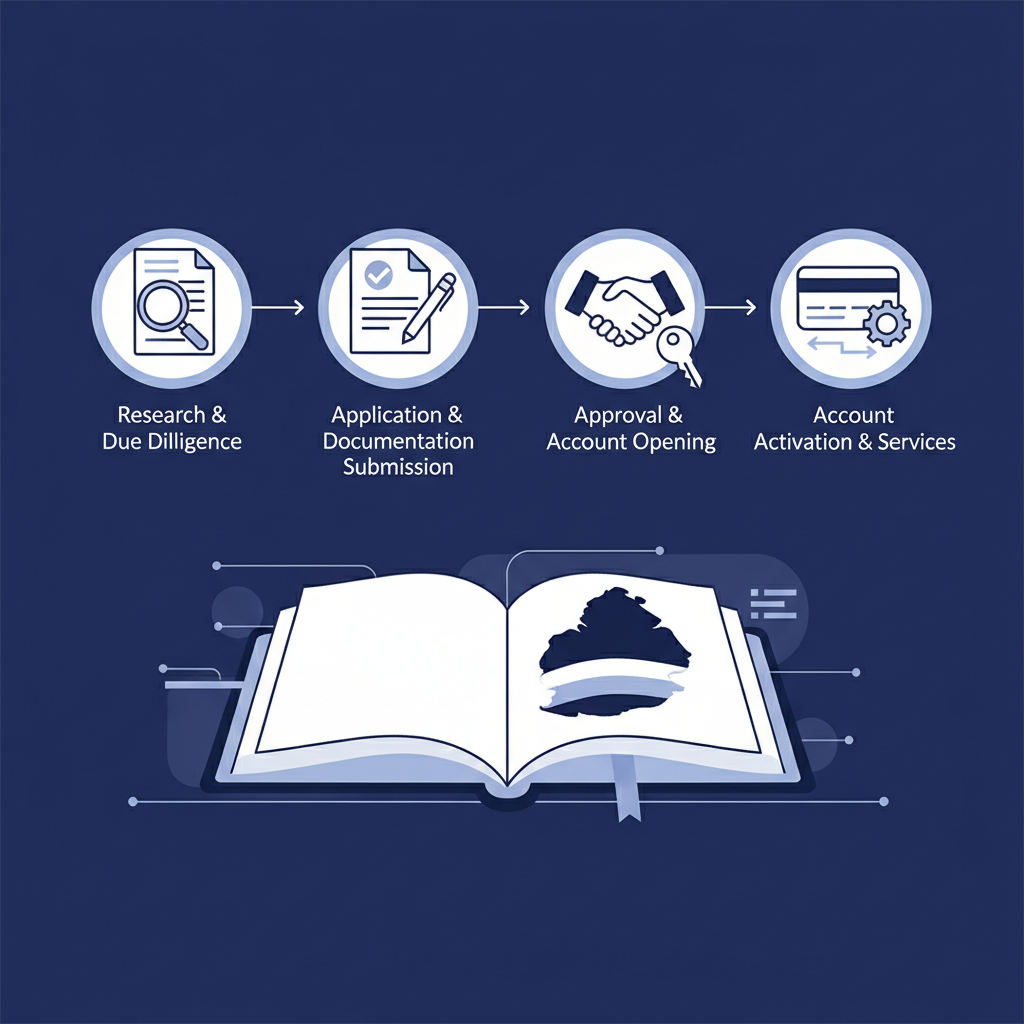
Opening a corporate bank account in Mauritius typically involves several stages, requiring meticulous preparation and adherence to bank requirements. While specific requirements may vary slightly between banks, the general process remains consistent.
Step 1: Initial Research and Bank Selection
The first crucial step is to research and select a suitable bank. Mauritius hosts several reputable local and international banks, each offering different services, fee structures, and specialisations. Key players include:
- Mauritius Commercial Bank (MCB): One of the largest and oldest banks, offering comprehensive services.
- SBM Bank (Mauritius) Ltd: Another major local bank with a strong regional presence.
- Absa Bank (Mauritius) Limited: Part of a large African financial services group.
- Standard Bank (Mauritius) Limited: A prominent international bank with a focus on Africa.
- HSBC (Mauritius) Limited: Offers global banking solutions.
Consider factors such as the bank's reputation, its understanding of your business sector, multi-currency capabilities, online banking facilities, customer service, and fee structures. It is advisable to contact a few banks to discuss your specific needs before making a decision.
Step 2: Preparation of Required Documentation
This is arguably the most critical and time-consuming step. Banks in Mauritius require extensive documentation to comply with KYC and AML regulations. The exact list can vary based on the company's structure, jurisdiction of incorporation, and the nature of its business activities. Generally, the following documents are required:
For the Company:
- Certificate of Incorporation/Registration: Official document confirming the company's legal existence.
- Memorandum and Articles of Association (M&A): Outlining the company's objectives and internal regulations.
- Certificate of Good Standing (if applicable): For companies incorporated outside Mauritius, confirming its active status.
- Board Resolution: Authorising the opening of the bank account and designating authorised signatories.
- Business Plan: Detailing the company's activities, source of funds, expected transaction volumes, and target markets. This is crucial for the bank to understand the business's legitimacy and risk profile.
- Source of Funds/Wealth Declaration: For the company's initial capital.
- Company Structure Chart: Illustrating the ownership structure, especially for complex structures.
- Proof of Registered Office Address: Utility bill or lease agreement.
For all Directors, Shareholders (holding 10% or more), Ultimate Beneficial Owners (UBOs), and Authorised Signatories:
- Certified Copy of Passport: Valid passport, certified by a notary public or an authorised professional.
- Proof of Residential Address: Recent utility bill (not older than 3 months) or bank statement showing the individual's name and address.
- Curriculum Vitae (CV): Detailing professional background and experience.
- Bank Reference Letter: From a reputable bank where the individual holds an account, confirming good standing.
- Professional Reference Letter: From an accountant, lawyer, or other professional.
- Source of Funds/Wealth Declaration: For the individual's personal wealth.
- Declaration of Non-Bankruptcy/Solvency.
All documents not in English or French must be accompanied by a certified translation. Certification usually requires a notary public, lawyer, or a professional body recognised by the bank.
Step 3: Submission of Application and Due Diligence
Once all documents are prepared, they are submitted to the chosen bank. The bank's compliance department will then initiate a rigorous due diligence process. This involves verifying the authenticity of the submitted documents, conducting background checks on all individuals associated with the company, and assessing the company's business activities and risk profile. This stage can take several weeks, depending on the complexity of the company structure and the responsiveness of the applicants to any further queries from the bank.
Step 4: Interview (Optional but Common)
Some banks may require an interview with the directors or authorised signatories, either in person or via video conference. This is an opportunity for the bank to gain a deeper understanding of the business and to clarify any aspects of the application.
Step 5: Account Activation
Upon successful completion of the due diligence and approval by the bank's compliance committee, the account will be opened and activated. The bank will provide account details, online banking access, and any other relevant banking instruments.
Costs and Timelines
Costs:
- Bank Fees: These vary significantly between banks and account types. Expect charges for account opening, monthly maintenance, transaction fees, and international transfers. It's crucial to obtain a detailed fee schedule from the bank.
- Professional Fees: If you engage a corporate service provider or a legal firm to assist with the process, their fees will be an additional cost. This can range from a few hundred to several thousand US dollars, depending on the complexity of the application and the services rendered.
- Certification and Translation Costs: Fees for notarisation, apostille, and certified translations of documents.
Timelines:
The timeline for opening a corporate bank account in Mauritius can vary widely:
- Preparation of Documents: 1-4 weeks (depending on how quickly you can gather and certify documents).
- Bank Due Diligence and Approval: 2-8 weeks (for straightforward cases, it might be quicker; for complex structures, it can take longer). Some banks may take up to 12 weeks or more if additional information is continuously requested.
Overall, it is realistic to expect the entire process to take anywhere from 4 to 12 weeks, or potentially longer for complex international structures. Proactive preparation and clear communication with the bank or your service provider can significantly expedite the process.
Common Challenges and How to Overcome Them
- Incomplete Documentation: The most frequent cause of delays. Ensure all documents are precisely as requested, certified correctly, and up-to-date.
- Lack of Clarity in Business Plan: A vague or poorly articulated business plan can raise red flags. Be precise about your business activities, target markets, and expected transaction flows.
- Complex Ownership Structures: Multi-layered corporate structures can prolong due diligence. Be prepared to provide extensive documentation for all beneficial owners.
- High-Risk Jurisdictions: If the company or its beneficial owners are from jurisdictions perceived as high-risk for AML/CFT, the due diligence will be more intense.
- Communication Gaps: Maintain open and prompt communication with the bank or your corporate service provider to address queries swiftly.
Engaging a reputable corporate service provider or a legal firm with expertise in Mauritian banking regulations can significantly streamline the process. They can assist with document preparation, liaise with banks, and navigate potential challenges, saving time and reducing frustration.
Conclusion
Opening a corporate bank account in Mauritius is a strategic move for international businesses seeking a stable, well-regulated, and internationally recognised financial platform. While the process demands meticulous preparation and adherence to stringent regulatory requirements, the benefits – including access to global markets, a favourable tax environment, and a robust banking infrastructure – are substantial. By understanding the step-by-step process, preparing all necessary documentation diligently, and potentially leveraging professional assistance, businesses can successfully establish their banking presence in this dynamic island nation, paving the way for international growth and operational efficiency.
The key takeaways are thorough preparation, patience during the due diligence phase, and clear communication. With these elements in place, Mauritius offers a compelling proposition for corporate banking, supporting global business ambitions effectively.