Opening a Corporate Bank Account in Ireland: A Comprehensive Step-by-Step Guide for Businesses
Establishing a corporate bank account in Ireland is a crucial step for any business operating or expanding into the Emerald Isle. This guide provides a detailed, step-by-step overview of the process, covering regulatory requirements, necessary documentation, and key considerations for a smooth and efficient setup. Understand the nuances of Irish banking to ensure your business is financially compliant and operational.
Opening a Corporate Bank Account in Ireland: A Comprehensive Step-by-Step Guide for Businesses
Ireland has long been an attractive jurisdiction for international businesses, thanks to its favourable corporate tax regime, highly skilled workforce, and strategic access to the European Union market. For any company establishing a presence in Ireland, whether a startup, an SME, or a multinational, opening a corporate bank account is not merely a formality but a fundamental necessity for operational efficiency, compliance, and financial management. This guide provides a detailed, step-by-step roadmap to navigating the process of opening a corporate bank account in Ireland, offering practical insights and addressing common challenges.
The Importance of a Local Corporate Bank Account
A local corporate bank account is indispensable for several reasons. Firstly, it facilitates seamless financial transactions within the Irish economy, including paying local suppliers, receiving payments from Irish customers, and managing payroll for Irish employees. Secondly, it is a prerequisite for tax compliance, enabling companies to remit taxes to the Irish Revenue Commissioners. Thirdly, it enhances credibility with local partners, investors, and regulatory bodies. Finally, it simplifies financial reporting and auditing, aligning with Irish accounting standards.
Key Players in the Irish Banking Sector
The Irish banking landscape is dominated by a few major retail and corporate banks. The primary institutions offering corporate banking services include:
- AIB (Allied Irish Banks): One of Ireland's largest banks, offering a full suite of corporate banking services.
- Bank of Ireland: Another leading financial institution with extensive corporate offerings and a strong international presence.
- Ulster Bank: While Ulster Bank has announced its withdrawal from the Republic of Ireland, its corporate accounts are still operational for existing clients, though new applications are generally not being accepted.
- Permanent TSB: Primarily a retail bank, but offers some business banking solutions for SMEs.
- KBC Bank Ireland: Similar to Ulster Bank, KBC has also announced its departure, impacting new corporate account applications.
Given the recent changes in the Irish banking sector, it is crucial for businesses to research the current offerings and long-term commitment of potential banking partners. Challenger banks and fintech solutions are also emerging, providing alternative options, particularly for smaller businesses and those with specific digital banking needs.
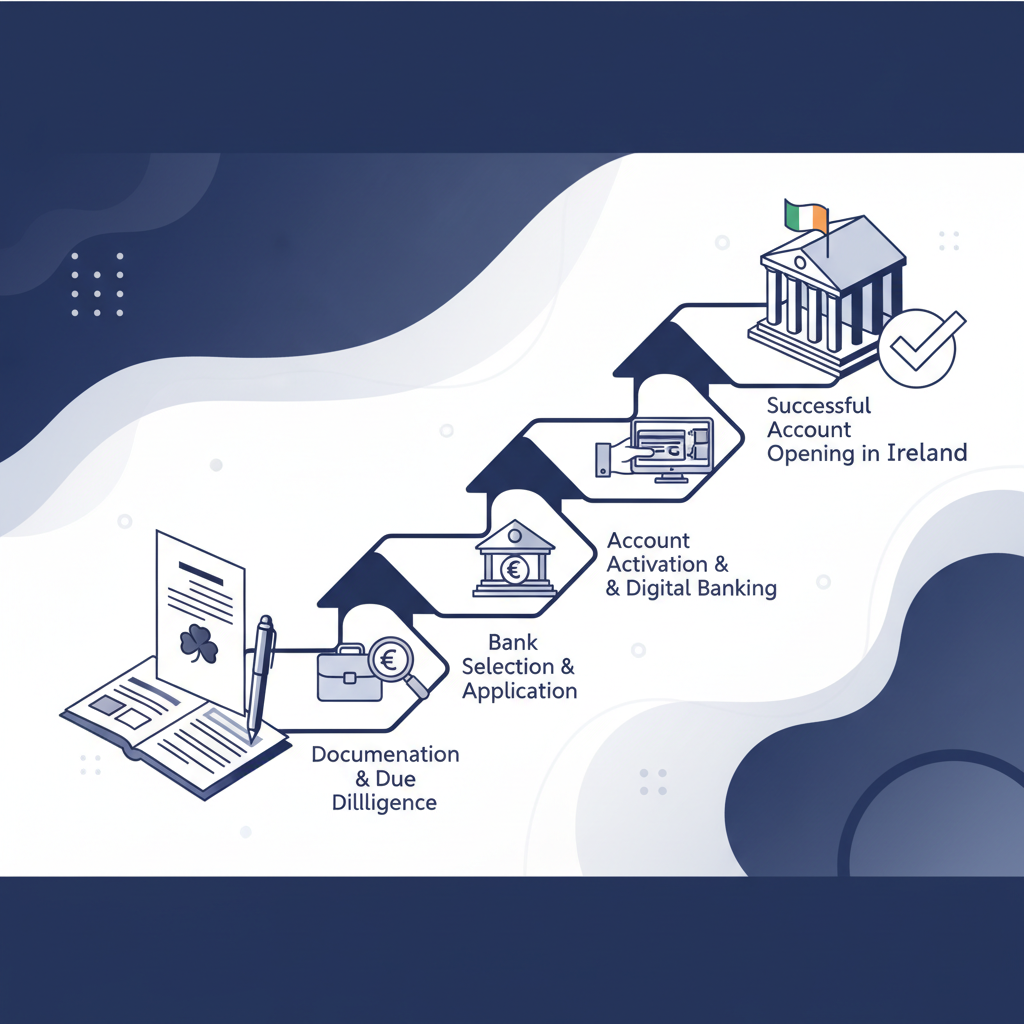
Step-by-Step Process for Opening a Corporate Bank Account
The process, while seemingly straightforward, requires meticulous preparation and adherence to regulatory requirements, primarily driven by Anti-Money Laundering (AML) and Counter-Terrorist Financing (CTF) legislation.
Step 1: Company Incorporation and Registration
Before approaching a bank, your company must be officially incorporated and registered in Ireland. This involves registering with the Companies Registration Office (CRO). You will need a Certificate of Incorporation and a company registration number. Banks will verify the legal existence and structure of your entity.
Step 2: Appointing Company Directors and Secretary
Ensure that your company has appointed at least one director who is resident in an EEA member state, or alternatively, obtain a Section 137 bond or appoint a non-EEA resident director and satisfy specific conditions. A company secretary is also required. Banks will need to verify the identities and addresses of all directors, beneficial owners, and signatories.
Step 3: Gathering Required Documentation
This is often the most time-consuming part of the process. Banks are legally obliged to conduct thorough 'Know Your Customer' (KYC) checks. The documentation typically required includes:
-
Company Documents:
- Certificate of Incorporation.
- Memorandum and Articles of Association.
- CRO printout showing current directors and registered office.
- Proof of registered office address (e.g., utility bill, lease agreement).
- Shareholder Register (detailing beneficial owners).
- Business plan (especially for new businesses, outlining activities, projected turnover, and banking needs).
- Tax registration number (if already obtained).
-
Director/Signatory/Beneficial Owner Documents:
- Proof of Identity: Valid passport or national identity card (certified copy).
- Proof of Address: Recent utility bill (gas, electricity, landline phone), bank statement, or government correspondence (dated within the last 3-6 months) showing the individual's name and residential address (certified copy).
- Tax Identification Number (TIN): For each individual.
- Curriculum Vitae (CV): Sometimes requested to understand professional background.
-
Additional Documents for Non-Resident Companies/Directors:
- Proof of company registration in the home country.
- Notarised and apostilled copies of corporate documents.
- Evidence of business activity and connection to Ireland.
All documents must be current, valid, and, if not in English, accompanied by a certified translation. Banks will often require original documents or certified copies by a solicitor, notary public, or accountant.
Step 4: Choosing a Bank and Submitting the Application
Research different banks to find one that best suits your business needs in terms of services, fees, online banking capabilities, and customer support. Contact the chosen bank to schedule an appointment or initiate an online application. Be prepared to discuss your business activities, expected transaction volumes, and specific banking requirements. The application form will require detailed information about your company and its beneficial owners.
Step 5: Due Diligence and Verification
Once the application and documents are submitted, the bank will conduct its due diligence. This can take several weeks, especially for non-resident companies or complex ownership structures. Banks will verify the authenticity of documents, conduct background checks on directors and beneficial owners, and assess the company's risk profile. Be proactive in responding to any requests for additional information.
Step 6: Account Activation
Upon successful completion of the due diligence process, the bank will approve your application and activate your corporate account. You will receive account details, online banking credentials, and information on how to use your new services. Some banks may require an initial deposit to activate the account fully.
Challenges and Considerations
- Non-Resident Directors/Beneficial Owners: This can complicate the KYC process, requiring more extensive documentation and potentially longer processing times. Some banks may have stricter policies for non-resident entities.
- Proof of Irish Presence: Banks often require tangible proof of a genuine business presence in Ireland, such as a physical office, local employees, or clear commercial ties.
- AML/CTF Regulations: Irish banks operate under stringent AML/CTF laws, making them very cautious. Transparency and complete disclosure are paramount.
- Timelines: While some accounts can be opened in a few weeks, complex cases, especially for non-resident entities, can take several months. Plan accordingly.
- Fees: Be aware of account maintenance fees, transaction charges, and international transfer costs. Compare these across different banks.
- Online vs. Branch Application: While some banks offer online application portals, many still prefer an in-person meeting, especially for new corporate clients, to verify identities and discuss business needs.
Tips for a Smooth Process
- Prepare Thoroughly: Have all required documents ready, certified, and translated before you begin the application process.
- Be Transparent: Provide accurate and complete information. Any discrepancies can lead to delays or rejection.
- Engage Professionals: Consider working with a local corporate services provider, solicitor, or accountant who can assist with company formation, document certification, and guide you through the banking application process.
- Build a Strong Business Case: Especially for new ventures, a well-articulated business plan demonstrating viability and a clear connection to the Irish economy can be beneficial.
- Communicate Proactively: Maintain open communication with your chosen bank and respond promptly to any queries.
Conclusion
Opening a corporate bank account in Ireland is a critical step for any business aiming to operate successfully within the Irish and European markets. While the process demands careful preparation and adherence to strict regulatory requirements, understanding each step and gathering the necessary documentation in advance can significantly streamline the experience. By choosing the right banking partner, providing comprehensive information, and demonstrating a clear business purpose, companies can establish their financial foothold in Ireland efficiently, paving the way for growth and compliance in this dynamic economy. Despite the initial administrative hurdles, a well-established banking relationship is foundational to leveraging Ireland's strategic advantages as a business hub.