
Navigating the Danish Business Landscape: A Comprehensive Guide to Entity Types
Denmark offers a diverse range of business entities, each with unique legal, financial, and administrative implications. Understanding these structures is crucial for entrepreneurs and international businesses looking to establish a presence in this dynamic Nordic economy. This guide provides an in-depth look at the primary business entity types available in Denmark.
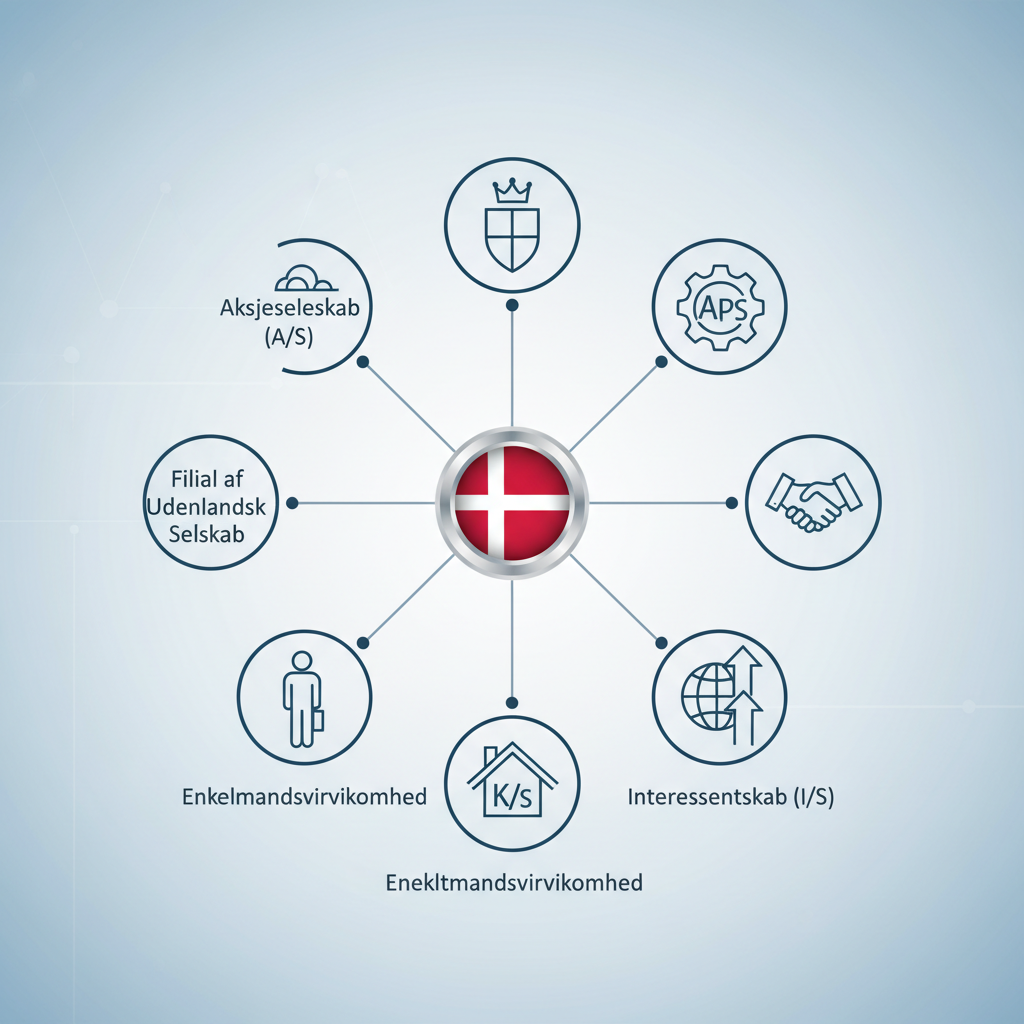
Navigating the Danish Business Landscape: A Comprehensive Guide to Entity Types
Denmark, consistently ranked among the easiest places to do business globally, offers a robust and transparent legal framework for various business entities. For entrepreneurs, startups, and international corporations eyeing the Nordic market, selecting the appropriate legal structure is a foundational decision that impacts everything from liability and taxation to administrative burden and fundraising potential. This comprehensive guide delves into the primary types of business entities available in Denmark, outlining their characteristics, advantages, and considerations.
I. Sole Proprietorship (Enkeltmandsvirksomhed)
1. Characteristics and Setup
The sole proprietorship, known as Enkeltmandsvirksomhed, is the simplest and most common form of business for individuals operating independently. It is owned and managed by one person, who is personally responsible for all business debts and obligations. There is no legal distinction between the owner and the business. Registration is relatively straightforward, typically involving registration with the Danish Business Authority (Erhvervsstyrelsen) and obtaining a CVR number (Central Business Register number). No minimum capital is required, making it an attractive option for small-scale operations and freelancers.
2. Advantages and Disadvantages
Advantages include ease of formation, minimal administrative requirements, and direct control over all business decisions. Profits are taxed as personal income, which can be advantageous for lower-earning businesses. Disadvantages primarily revolve around unlimited personal liability, meaning the owner's personal assets are at risk if the business incurs debts or faces legal claims. This structure can also make it harder to raise capital from external investors, as there are no shares to issue.
II. Partnerships
Denmark recognizes several forms of partnerships, offering varying degrees of liability and management structures for co-owned businesses.
1. General Partnership (Interessentskab - I/S)
An Interessentskab (I/S) involves two or more partners who are jointly and severally liable for the partnership's debts and obligations. This means each partner is fully liable for all debts, regardless of their individual contribution or share in the business. An I/S must be registered with the Danish Business Authority. A partnership agreement outlining responsibilities, profit sharing, and dispute resolution is highly recommended, though not legally mandatory for registration.
2. Limited Partnership (Kommanditselskab - K/S)
A Kommanditselskab (K/S) is a hybrid structure featuring at least one general partner (komplementar) with unlimited liability and at least one limited partner (kommanditist) whose liability is restricted to their capital contribution. The general partner typically manages the business, while limited partners are often passive investors. This structure is frequently used for investment funds or projects where some investors prefer limited exposure. Like other partnerships, it requires registration.
III. Limited Liability Companies
Limited liability companies are popular choices for businesses seeking to protect personal assets from business risks. Denmark offers two main types.
1. Private Limited Company (Anpartsselskab - ApS)
The Anpartsselskab (ApS) is the most common form of limited liability company in Denmark, suitable for small to medium-sized businesses. It requires a minimum share capital of DKK 40,000 (approximately EUR 5,300), which must be fully paid up upon registration. Shareholders' liability is limited to their capital contribution. An ApS must have a board of directors (or a management board if there's only one director) and is subject to annual financial reporting requirements and audits (depending on size). It offers credibility and makes it easier to attract investors compared to sole proprietorships or general partnerships.
2. Public Limited Company (Aktieselskab - A/S)
The Aktieselskab (A/S) is designed for larger enterprises and those intending to raise capital from the public. It requires a significantly higher minimum share capital of DKK 400,000 (approximately EUR 53,000), which must also be fully paid up. An A/S must have both a board of directors and a management board, or a supervisory board and a management board. It is subject to more stringent regulatory and reporting requirements than an ApS, including mandatory audits. Shares of an A/S can be publicly traded, making it suitable for companies planning an IPO or seeking significant public investment.
IV. Other Business Entities and Considerations
Beyond the core structures, Denmark offers specialized entities and important considerations for foreign businesses.
1. Branch Office (Filial)
A branch office (filial) is not a separate legal entity but an extension of a foreign parent company. It allows a foreign company to conduct business in Denmark without forming a new Danish company. The parent company remains fully liable for the branch's activities and debts. Registration is required, and the branch must adhere to Danish accounting and tax regulations. This option is often chosen by foreign companies wishing to test the Danish market or conduct specific operations without full incorporation.
2. European Company (Societas Europaea - SE)
The Societas Europaea (SE) is a public limited company incorporated under European Union law, allowing companies to operate across EU member states under a single legal form. It requires a minimum share capital of EUR 120,000. An SE offers flexibility for cross-border mergers and transfers of registered offices within the EU, but its formation and governance are complex, typically suited for large multinational corporations.
3. Cooperative (Andelsselskab - Amba)
Cooperatives (Andelsselskab or Amba) are member-owned and controlled organizations where members share in the profits or benefits. They are common in agriculture, housing, and consumer services. Liability can be limited or unlimited, depending on the specific cooperative's articles of association. This structure prioritizes member benefit over profit maximization for shareholders.
V. Conclusion and Strategic Choice
Choosing the right business entity in Denmark is a critical strategic decision that should align with the entrepreneur's goals, risk tolerance, capital availability, and long-term vision. For solo entrepreneurs with minimal capital and low risk, the Enkeltmandsvirksomhed offers simplicity. As businesses grow and seek to limit personal liability or attract external investment, the Anpartsselskab becomes a highly attractive and widely used option. Larger enterprises or those aiming for public listing will find the Aktieselskab more suitable. Foreign companies can opt for a branch office for initial market entry or full incorporation for a deeper commitment.
It is highly advisable to seek professional legal and financial counsel when making this decision. Danish regulations, while transparent, can be intricate, and expert guidance ensures compliance, optimizes tax efficiency, and establishes a solid foundation for sustainable growth in the Danish market. Understanding these structures is not just a legal formality but a key enabler for successful business operations in Denmark's competitive yet welcoming economic environment.


