
Navigating the Costs: A Comprehensive Guide to Setting Up a Company in Denmark
Denmark, renowned for its robust economy and business-friendly environment, attracts numerous entrepreneurs and foreign investors. Understanding the financial implications of company formation is crucial for successful market entry and sustainable growth in this Scandinavian nation.
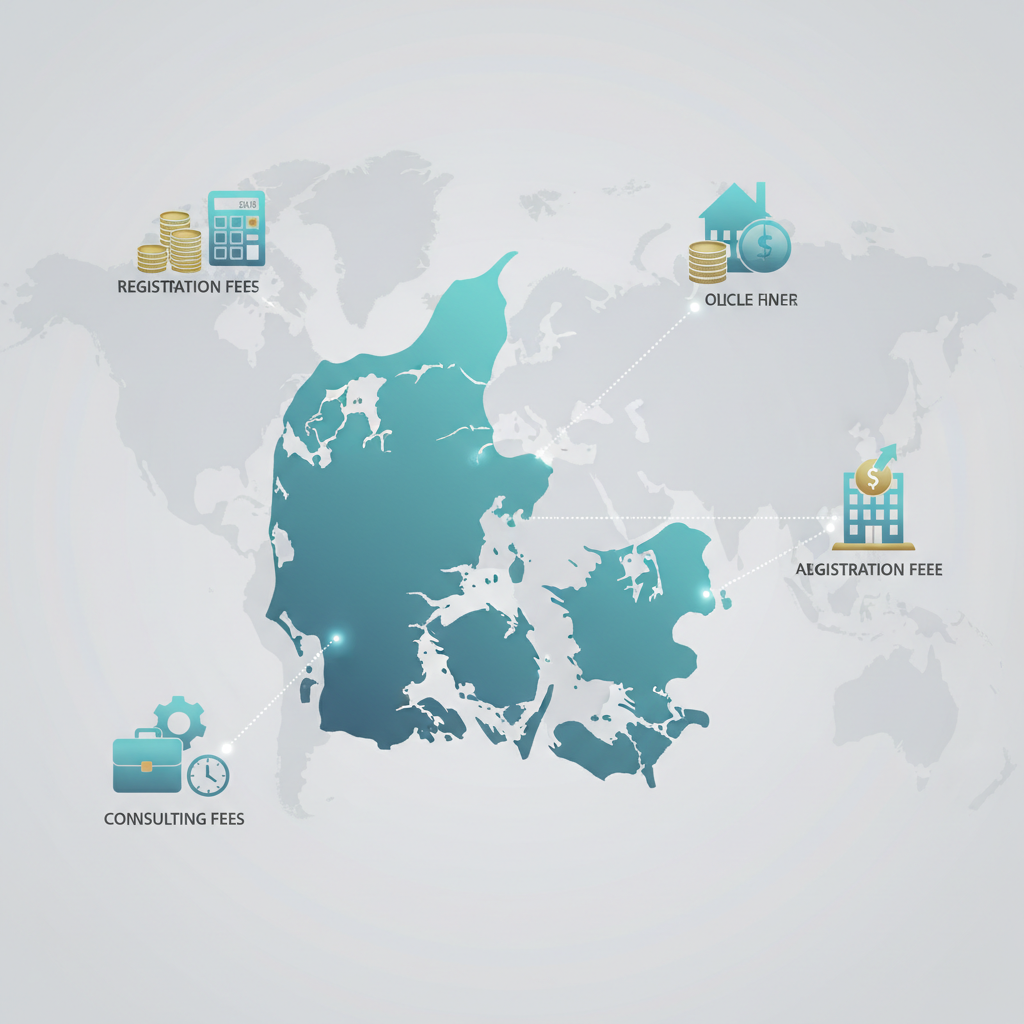
Denmark consistently ranks among the top countries globally for ease of doing business, offering a stable political landscape, a highly skilled workforce, and a strong digital infrastructure. These factors make it an attractive destination for establishing a new company. However, like any developed economy, setting up a business in Denmark involves various costs, both upfront and ongoing. This article provides a comprehensive overview of the financial considerations for company formation in Denmark, helping prospective business owners budget effectively and plan their market entry strategy.
Initial Setup Costs: The Foundation of Your Danish Venture
Establishing a company in Denmark involves several mandatory and optional initial costs. These can vary significantly depending on the chosen legal structure and the specific services engaged.
Registration Fees and Legal Structures
The most common legal structures for businesses in Denmark are the Anpartsselskab (ApS), a private limited company, and the Aktieselskab (A/S), a public limited company. For most small to medium-sized enterprises (SMEs) and foreign investors, the ApS is the preferred choice due to its lower capital requirements and simpler administration.
-
Anpartsselskab (ApS): The minimum share capital required for an ApS is DKK 40,000 (approximately €5,360). This capital must be fully paid up at the time of registration. The registration fee with the Danish Business Authority (Erhvervsstyrelsen) is typically around DKK 670 (approximately €90) for online registration. If you opt for paper-based registration, the fee is higher, usually DKK 2,150 (approximately €288). While the share capital is an initial outlay, it remains within the company and can be used for business operations.
-
Aktieselskab (A/S): An A/S requires a significantly higher minimum share capital of DKK 400,000 (approximately €53,600). The registration fee is similar to that of an ApS, DKK 670 for online and DKK 2,150 for paper-based registration. The A/S structure is generally chosen by larger corporations or those planning to raise capital publicly.
-
Sole Proprietorship (Enkeltmandsvirksomhed): For individuals looking to start a business with minimal initial investment and full personal liability, a sole proprietorship is an option. There is no minimum capital requirement, and registration with the Danish Business Authority is free of charge.
Professional Services: Legal and Accounting Support
Engaging professional assistance is highly recommended, especially for foreign investors unfamiliar with Danish corporate law and tax regulations. These services can significantly streamline the setup process and ensure compliance.
-
Legal Fees: Lawyers can assist with drafting articles of association, shareholder agreements, and other necessary legal documents. They also provide guidance on corporate governance and compliance. Legal fees can range from DKK 5,000 to DKK 25,000 (approximately €670 to €3,350) or more, depending on the complexity of the company structure and the extent of services required.
-
Accounting and Auditing Fees: An accountant is crucial for setting up the company's financial system, registering for VAT, and ensuring compliance with Danish accounting standards. Initial accounting setup fees can range from DKK 3,000 to DKK 10,000 (approximately €400 to €1,340). For an ApS, an auditor is not mandatory unless specific criteria are met (e.g., exceeding certain revenue or asset thresholds). However, for an A/S, an auditor is always required, and audit fees can be substantial.
-
Virtual Office/Registered Address: If you don't have a physical presence in Denmark, you will need a registered business address. Many service providers offer virtual office solutions, which typically cost DKK 500 to DKK 1,500 (approximately €67 to €200) per month, or DKK 3,000 to DKK 10,000 (approximately €400 to €1,340) annually.
Ongoing Operational Costs: Sustaining Your Danish Business
Beyond the initial setup, businesses in Denmark incur various ongoing operational costs that need to be factored into the financial planning.
Administrative and Compliance Costs
Maintaining a company in Denmark involves regular administrative tasks and compliance requirements.
-
Annual Reporting: All Danish companies are required to submit annual financial statements to the Danish Business Authority. The preparation and submission of these reports often involve accounting fees, which can range from DKK 5,000 to DKK 20,000 (approximately €670 to €2,680) or more, depending on the company's size and transaction volume.
-
Tax Compliance: Denmark has a corporate tax rate of 22%. Companies must register for VAT (Moms) if their taxable turnover exceeds DKK 50,000 (approximately €6,700) annually. Regular VAT reporting and payment are mandatory. Engaging an accountant for ongoing tax advice and compliance is a recurring cost.
-
Bank Account Maintenance: Opening and maintaining a corporate bank account in Denmark typically involves monthly or annual fees, which vary by bank and the services utilized. These can range from DKK 100 to DKK 500 (approximately €13 to €67) per month.
Human Resources and Infrastructure
If your company plans to hire employees or establish a physical office, these costs will form a significant portion of your operational budget.
-
Salaries and Benefits: Denmark has a high-wage economy and a comprehensive social security system. Employers contribute significantly to social security, pensions, and other benefits. Average salaries are competitive, and it's essential to research industry-specific wage levels. For example, a typical entry-level professional salary might start from DKK 30,000 (approximately €4,000) per month, with employer contributions adding another 20-30% on top of the gross salary.
-
Office Space: Rent for office space varies widely depending on location (Copenhagen being the most expensive) and size. In central Copenhagen, office rent can range from DKK 1,500 to DKK 3,000 (approximately €200 to €400) per square meter annually. Outside major cities, costs are significantly lower. Utilities, internet, and office supplies are additional expenses.
-
Insurance: Businesses in Denmark are generally required to have various types of insurance, including liability insurance, workers' compensation insurance, and potentially professional indemnity insurance. The cost of insurance depends on the industry, company size, and risk profile.
Additional Considerations and Hidden Costs
Beyond the direct financial outlays, several other factors can influence the overall cost of setting up and operating a business in Denmark.
Language and Cultural Adaptation
While English is widely spoken in Danish business circles, official documentation and some local interactions may require Danish. Translating documents or hiring bilingual staff can incur additional costs. Understanding Danish business culture and etiquette is also crucial for effective communication and relationship building.
Software and IT Infrastructure
Denmark is a highly digitalized society. Investing in appropriate software for accounting, project management, CRM, and other business functions is essential. Cloud services, cybersecurity measures, and IT support are recurring expenses that contribute to operational efficiency and data security.
Marketing and Business Development
To establish a presence and acquire customers in the Danish market, businesses need to allocate resources for marketing and business development. This can include website development, digital marketing campaigns, participation in trade fairs, and local networking events. These costs are highly variable but critical for growth.
Conclusion: Strategic Investment for Long-Term Success
Setting up a company in Denmark, while involving various costs, represents a strategic investment in a stable, innovative, and highly competitive market. The initial capital requirements for an ApS are manageable, and the ongoing operational costs are commensurate with a high-income economy. By carefully planning and budgeting for registration fees, professional services, administrative compliance, and potential human resource and infrastructure needs, entrepreneurs can successfully navigate the Danish business landscape.
Engaging with local experts, such as lawyers and accountants, from the outset is paramount to ensure compliance and optimize financial structures. While the costs may seem substantial, the benefits of operating in Denmark – including access to a skilled workforce, a strong legal framework, and a gateway to the Nordic and European markets – often outweigh the financial outlays, paving the way for long-term success and profitability.


