Navigating Swiss Banking: A Guide for Foreign-Owned Companies
Switzerland's robust financial sector offers significant advantages for foreign-owned companies, but navigating its banking requirements demands careful preparation. This article provides a comprehensive guide to understanding the regulatory landscape, account opening processes, and compliance obligations for international businesses operating in Switzerland.
Introduction to Swiss Banking for Foreign-Owned Companies
Switzerland has long been synonymous with financial stability, discretion, and a highly sophisticated banking system. For foreign-owned companies establishing a presence in this economically vibrant nation, understanding the intricacies of Swiss banking requirements is paramount. While the allure of a strong currency, political neutrality, and a business-friendly environment is undeniable, the banking landscape has evolved significantly, particularly concerning international clients and anti-money laundering (AML) regulations. This article aims to demystify the process, providing a comprehensive overview for entrepreneurs and business professionals looking to leverage Switzerland's financial infrastructure.
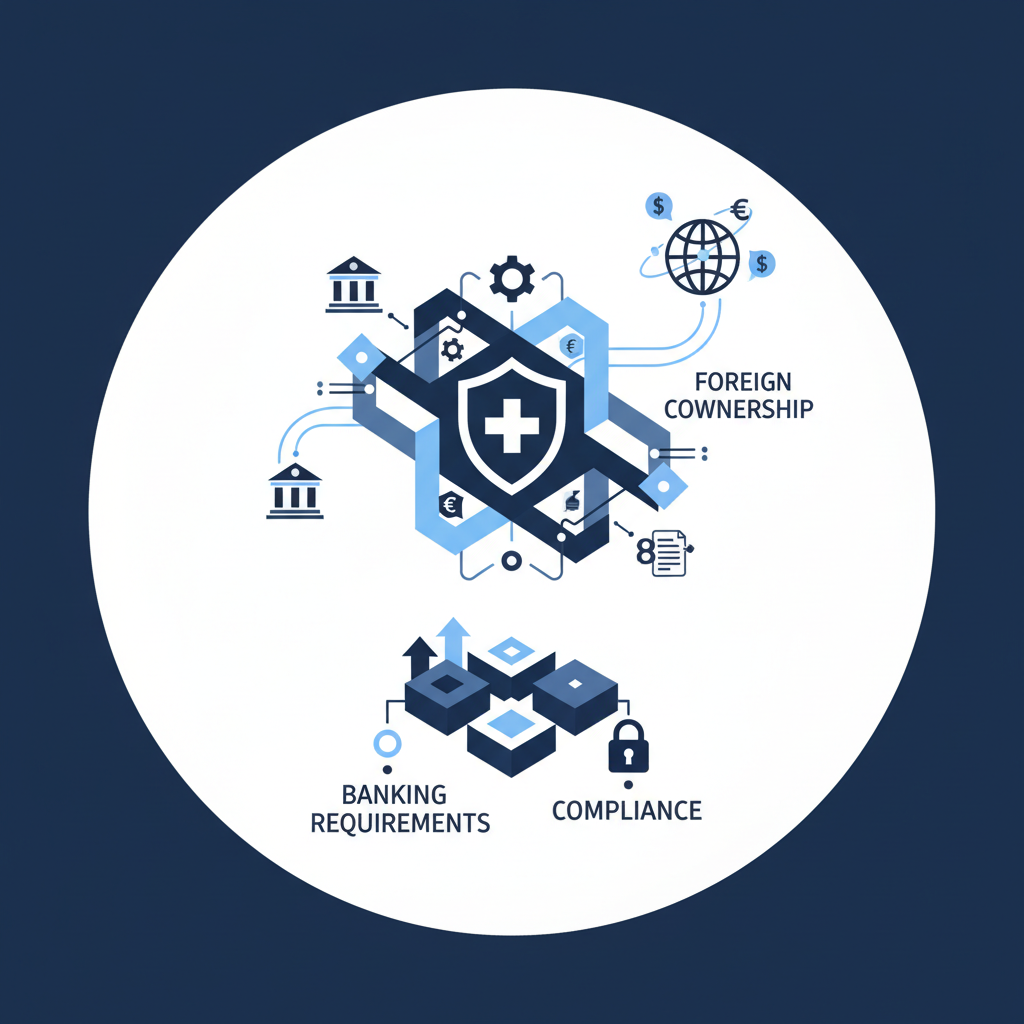
Establishing a corporate bank account in Switzerland is a critical step for any foreign-owned entity, whether it's a subsidiary, branch, or a holding company. This account serves as the operational backbone, facilitating transactions, managing payroll, and ensuring regulatory compliance. The Swiss Financial Market Supervisory Authority (FINMA) oversees the country's financial institutions, ensuring adherence to stringent rules designed to maintain the integrity and reputation of the Swiss financial sector. Foreign-owned companies must be prepared for a thorough due diligence process, which is more rigorous than in many other jurisdictions, reflecting Switzerland's commitment to combating financial crime and upholding its reputation for quality.
Key Regulatory Framework and Compliance
The cornerstone of Swiss banking regulation is the Banking Act and the Anti-Money Laundering Act (AMLA). These laws, along with FINMA ordinances, dictate the obligations of financial institutions and, by extension, their clients. For foreign-owned companies, compliance with these regulations is not just a legal necessity but a prerequisite for successful banking relationships. Banks are legally obliged to identify their clients and the beneficial owners behind them, as well as to understand the economic purpose of the business relationship. This principle, known as 'Know Your Customer' (KYC), is rigorously applied.
Anti-Money Laundering (AML) and Due Diligence
The AMLA requires Swiss banks to conduct extensive due diligence on all clients, especially those with international connections. For foreign-owned companies, this means providing detailed information about:
- Beneficial Owners: Full identification of all individuals who ultimately own or control more than 25% of the company, even if ownership is indirect through multiple layers of corporate entities. This includes passports, proof of address, and sometimes even source of wealth declarations.
- Company Structure: Comprehensive documentation outlining the legal structure, articles of association, shareholder registers, and board resolutions.
- Business Activities: A clear description of the company's intended business activities, its target markets, and its expected transaction volumes and types.
- Source of Funds: Evidence of the origin of the company's initial capital and ongoing funding. This can be a significant hurdle for companies with complex international funding structures.
- Political Exposed Persons (PEPs): Enhanced due diligence is applied if any beneficial owner or key management personnel is identified as a Politically Exposed Person.
Banks are also required to monitor transactions for unusual patterns that might indicate illicit activities. Companies must be prepared to provide justifications for significant or unusual transactions. Failure to comply with AML requirements can lead to account closure, reporting to authorities, and severe reputational damage.
FATCA and CRS Implications
Switzerland is a signatory to both the Foreign Account Tax Compliance Act (FATCA) with the United States and the Common Reporting Standard (CRS) developed by the OECD. These agreements mandate the automatic exchange of financial account information with tax authorities in participating jurisdictions. For foreign-owned companies, this means that details of their Swiss bank accounts, including balances and income, will be reported to the tax authorities of the countries where their beneficial owners reside for tax purposes. Companies must ensure their tax affairs are in order in all relevant jurisdictions to avoid potential issues arising from this information exchange.
The Account Opening Process: Steps and Challenges
Opening a corporate bank account in Switzerland for a foreign-owned company is a multi-step process that requires patience and meticulous preparation. It is rarely an overnight affair and can take several weeks or even months, depending on the complexity of the company structure and the completeness of the documentation.
Initial Contact and Pre-Screening
The first step typically involves initial contact with a chosen bank. Many Swiss banks have dedicated international desks or relationship managers specializing in corporate clients. During this phase, the bank will conduct a preliminary assessment based on the company's profile, country of origin, and intended business activities. Some banks may have specific policies regarding certain industries or high-risk jurisdictions, potentially leading to a refusal to proceed at this early stage.
Documentation Submission
Once the bank agrees to proceed, a comprehensive documentation package will be requested. This usually includes:
- Certified copies of the company's incorporation documents (e.g., Articles of Association, Certificate of Incorporation).
- Extract from the Commercial Register (Handelsregisterauszug).
- Board resolution authorizing the account opening and designating signatories.
- Identification documents (passport, proof of address) for all beneficial owners, directors, and authorized signatories.
- Proof of the company's registered address in Switzerland (if applicable).
- Detailed business plan outlining activities, revenue streams, and financial projections.
- Evidence of the source of initial capital.
- Completed bank application forms, including declarations regarding beneficial ownership and tax residency.
All foreign documents must typically be apostilled or legalized and translated into German, French, or Italian (depending on the canton and bank's preference) by a certified translator.
Interview and Due Diligence Review
Banks often require an in-person meeting with key representatives of the foreign-owned company, such as directors or beneficial owners. This interview serves to clarify any ambiguities in the documentation, understand the business model in detail, and assess the client's credibility. The bank's compliance department will then conduct a thorough review of all submitted information, cross-referencing it with internal and external databases. This is the most time-consuming part of the process.
Potential Challenges and Solutions
- High-Risk Jurisdictions: Companies with beneficial owners or significant operations in jurisdictions deemed high-risk for money laundering or terrorism financing may face significant hurdles or outright refusal.
- Complex Ownership Structures: Multi-layered corporate structures can complicate beneficial owner identification, requiring extensive documentation to trace ownership back to natural persons.
- Lack of Swiss Nexus: Some banks prefer companies with a clear economic link to Switzerland (e.g., local employees, physical office, significant local operations). Companies that are purely holding entities with no operational presence may find it harder.
- Costs: Corporate bank accounts in Switzerland typically involve higher fees than in many other countries, including account maintenance fees, transaction charges, and potentially fees for specific services. These costs should be factored into the business plan.
To mitigate these challenges, foreign-owned companies should seek professional advice from Swiss legal and financial experts. These advisors can help prepare the necessary documentation, liaise with banks, and navigate the regulatory landscape efficiently.
Choosing the Right Banking Partner
Selecting the appropriate banking partner is a strategic decision for any foreign-owned company in Switzerland. The choice should go beyond mere account opening and consider the long-term financial needs and growth trajectory of the business.
Types of Banks and Services
Switzerland offers a diverse range of banks, each with its own strengths:
- Universal Banks (e.g., UBS, Credit Suisse – now part of UBS): These large institutions offer a full spectrum of services, from corporate banking and trade finance to investment banking and wealth management. They have extensive international networks and sophisticated digital platforms.
- Cantonal Banks: Owned by the respective cantons, these banks often have a strong regional focus and may offer more personalized services, sometimes with competitive local rates.
- Private Banks: Traditionally focused on wealth management for high-net-worth individuals, some private banks also cater to corporate clients, particularly those requiring bespoke financial solutions and a high degree of personalized service.
- Online/Neobanks: A growing number of digital-first banks offer streamlined processes and lower fees, though their services might be more limited for complex corporate needs.
When choosing a bank, consider the following factors:
- Industry Specialization: Does the bank have experience with companies in your industry?
- International Reach: Is its network suitable for your international transaction needs?
- Digital Capabilities: Does it offer robust online banking, payment solutions, and integration with accounting software?
- Language Support: Can they communicate effectively in your preferred language?
- Fee Structure: Understand all associated costs, including account maintenance, transaction fees, and foreign exchange rates.
- Relationship Management: The quality of the relationship manager can significantly impact your banking experience.
Essential Banking Services
Beyond basic account facilities, foreign-owned companies should look for banks that offer:
- Multi-currency accounts: Essential for international trade.
- International payment solutions: Efficient and cost-effective ways to send and receive funds globally.
- Trade finance: Letters of credit, guarantees, and other instruments to support international commerce.
- Treasury services: Cash management, foreign exchange hedging, and liquidity management.
- Corporate lending: Access to credit facilities for growth and operational needs.
- Digital banking platforms: Secure and user-friendly online and mobile banking for efficient financial management.
Conclusion
Establishing banking relationships for a foreign-owned company in Switzerland is a rigorous but ultimately rewarding process. The country's commitment to financial integrity, coupled with its robust legal framework, ensures a secure and stable environment for businesses. While the due diligence requirements are stringent and the account opening process can be lengthy, thorough preparation, transparency, and professional guidance can significantly streamline the journey. By understanding the regulatory landscape, meticulously preparing documentation, and choosing the right banking partner, foreign-owned companies can successfully integrate into the Swiss financial system and leverage its many advantages for their international operations and growth. Switzerland remains a premier destination for businesses seeking a reliable and sophisticated financial infrastructure, provided they are prepared to meet its high standards of compliance and transparency.