Navigating Malta's Digital Nomad Visa: A Comprehensive Guide for Remote Professionals
Malta has emerged as a premier destination for digital nomads, offering a unique blend of Mediterranean lifestyle, robust infrastructure, and attractive tax incentives. This article provides an in-depth guide to Malta's Nomad Residence Permit, detailing eligibility, application procedures, costs, and key considerations for remote professionals.
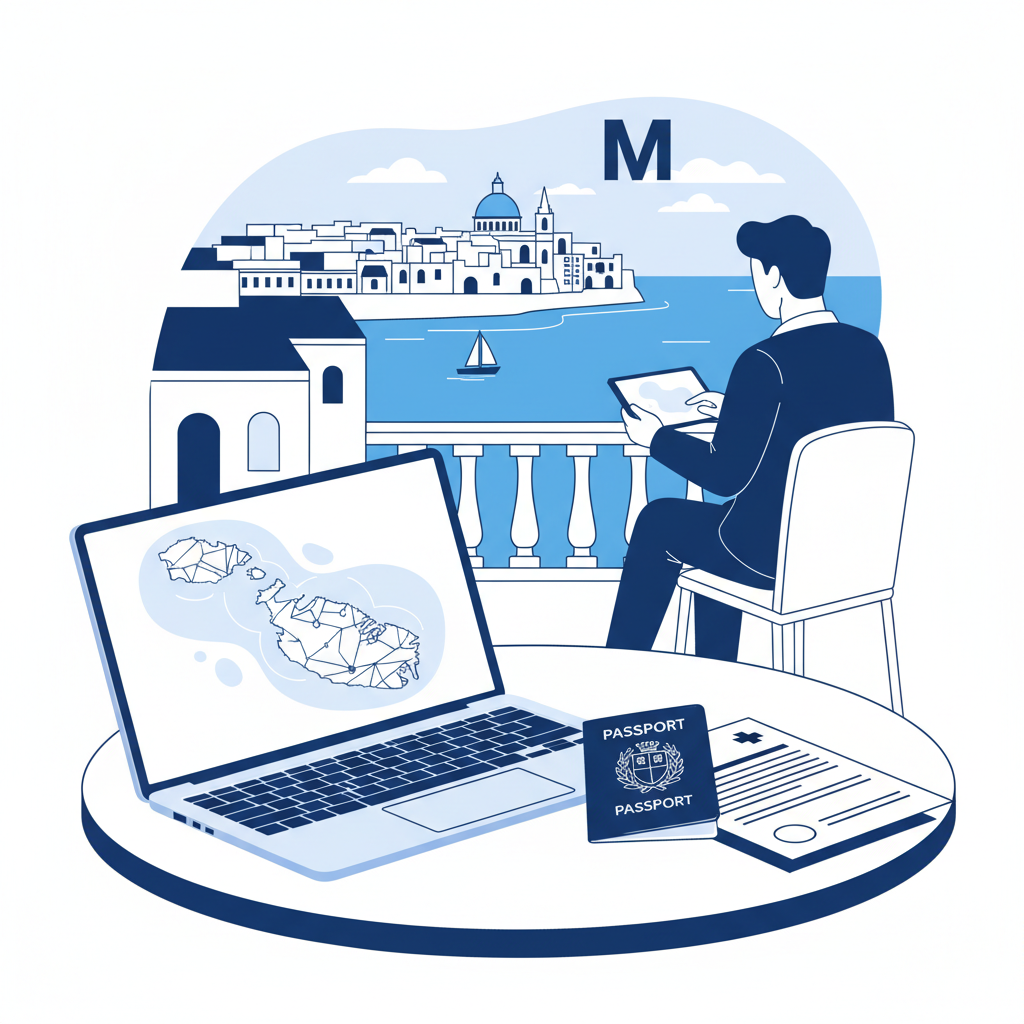
Malta, an archipelago in the central Mediterranean, has strategically positioned itself as a highly attractive hub for digital nomads. With its vibrant culture, English as an official language, excellent internet connectivity, and a favourable tax regime, the island nation offers an enticing proposition for remote professionals seeking a European base. The Maltese government, recognising the economic potential of this growing demographic, introduced the Nomad Residence Permit, designed to facilitate the relocation of non-EU/EEA nationals who can work remotely.
Understanding Malta's Nomad Residence Permit
The Nomad Residence Permit, launched in 2021, allows individuals from outside the European Union and European Economic Area to legally reside in Malta while continuing to work for employers or clients based outside the country. This initiative is managed by Residency Malta Agency, a government entity responsible for various residency programmes. The permit is initially granted for one year, with the possibility of renewal, provided the applicant continues to meet the eligibility criteria. It is distinct from other residency schemes, focusing specifically on individuals whose income is derived from remote work activities conducted for entities outside Malta.
Eligibility Criteria for the Nomad Residence Permit
To qualify for Malta's Nomad Residence Permit, applicants must meet several key requirements. The primary criterion revolves around the nature of their employment or business activities. Applicants must demonstrate that they fall into one of the following categories:
- Working for an employer registered in a foreign country: This applies to individuals who are employed by a company outside Malta and perform their duties remotely from Malta.
- Conducting business activities for a company registered in a foreign country: This covers self-employed individuals or freelancers who have contracts with clients or companies located outside Malta.
- Offering freelance or consulting services to clients whose permanent establishments are in a foreign country: Similar to the above, this caters to independent contractors with international client bases.
Crucially, applicants must prove a minimum gross monthly income of €2,700. This figure is subject to review and may change, so it is always advisable to check the latest requirements on the Residency Malta Agency website. For applicants wishing to include family members, an additional income threshold applies: €500 per month for a spouse or partner and €150 per month for each dependent child. All income must be sourced from outside Malta. Applicants must also hold a valid travel document, possess comprehensive health insurance covering Malta, and pass a fit and proper test, which includes a clean criminal record check.
Application Process and Required Documentation
The application process for the Nomad Residence Permit is designed to be streamlined, though it requires meticulous attention to detail regarding documentation. The entire process is typically handled online, followed by an in-person appointment in Malta.
Key Steps in the Application Process
- Initial Inquiry and Document Preparation: Prospective applicants should first gather all necessary documents. This includes a valid passport, a detailed CV, proof of income (bank statements, employment contracts, client invoices), a letter of intent explaining the motivation for moving to Malta, and proof of accommodation in Malta (rental agreement or property ownership). If applying with family, marriage certificates and birth certificates for children are also required.
- Submission of Application Form: The official application form, along with all supporting documents, is submitted to Residency Malta Agency. This can often be done via email initially.
- Preliminary Assessment: The agency conducts a preliminary review of the application to ensure all documents are in order and the applicant meets the basic eligibility criteria. If successful, an 'Approval in Principle' is issued.
- Visa Application (if applicable): Non-visa-exempt nationals will then need to apply for a national visa (Type D) to enter Malta. The 'Approval in Principle' letter is crucial for this step.
- Arrival in Malta and Finalisation: Upon arrival in Malta, applicants must attend an in-person appointment at Residency Malta Agency to submit biometric data and finalise their application. This is also when the health insurance policy is typically presented.
- Issuance of Permit: Once all checks are completed and approved, the Nomad Residence Permit card is issued.
Essential Documentation Checklist
- Completed application form (Form N1 and N2 for dependants).
- Copy of valid passport (all pages).
- Detailed Curriculum Vitae (CV).
- Letter of Intent outlining reasons for choosing Malta and confirming remote work status.
- Proof of employment/business: employment contract, company registration documents, client contracts, invoices.
- Proof of income: bank statements for the last three to six months, showing consistent income meeting the threshold.
- Proof of accommodation in Malta: rental agreement or property purchase agreement.
- Comprehensive health insurance policy valid in Malta.
- Police conduct certificate (clean criminal record) from country of origin and any country of residence for the past 10 years.
- Marriage certificate (if applicable).
- Birth certificates for dependent children (if applicable).
All non-English documents must be officially translated into English and apostilled or legalised where required.
Costs, Timelines, and Tax Implications
Understanding the financial aspects and timelines is crucial for planning a move to Malta under the Nomad Residence Permit scheme.
Application Fees and Associated Costs
The primary application fee for the Nomad Residence Permit is €300 per applicant. This fee is non-refundable. Beyond this, applicants should budget for other costs, including:
- Health Insurance: Costs vary widely based on coverage and provider, but expect to pay several hundred euros annually.
- Accommodation: Rental costs in Malta can range from €600 to €1,500+ per month for a one or two-bedroom apartment, depending on location (e.g., Valletta, Sliema, St. Julian's being more expensive).
- Visa Fees: If a national visa is required, additional fees will apply, typically around €80-€100.
- Legal/Consultancy Fees: While not mandatory, many applicants opt to use the services of a local immigration lawyer or consultant to assist with the application, which can add €1,000 to €3,000 or more to the overall cost.
- Travel Costs: Flights to Malta and initial living expenses upon arrival.
Processing Timelines
From the submission of a complete application to the issuance of the permit, the process can take approximately 30-45 days for the preliminary assessment and 'Approval in Principle'. The subsequent visa application (if needed) can take another 2-4 weeks. Once in Malta, the finalisation and permit card issuance generally occur within a few weeks. It is advisable to start the process well in advance, ideally 2-3 months before the intended relocation date, to account for potential delays or requests for additional documentation.
Tax Residency and Implications
One of the most significant advantages for digital nomads in Malta is the potentially favourable tax regime. Under the Nomad Residence Permit, individuals are generally considered non-domiciled residents for tax purposes, provided they do not spend more than 183 days in Malta in a given tax year and do not establish their 'centre of vital interests' in Malta. This means that they are typically only taxed on income earned or remitted to Malta. Income earned from remote work activities for foreign entities, and not remitted to Malta, may not be subject to Maltese tax. However, this is a complex area, and professional tax advice from a Maltese expert is highly recommended to ensure compliance and optimise tax planning. Misinterpreting tax residency rules can lead to significant liabilities.
Life as a Digital Nomad in Malta
Beyond the administrative aspects, Malta offers a high quality of life that attracts digital nomads. The island boasts over 300 days of sunshine annually, stunning historical sites, beautiful beaches, and a vibrant social scene. English is an official language, making integration seamless for English speakers.
Connectivity and Infrastructure
Malta has invested heavily in its digital infrastructure. High-speed internet is widely available, with fibre optic connections common in urban areas. Co-working spaces are increasingly popular, offering flexible office solutions and networking opportunities. The island is well-connected by air to major European cities, facilitating travel.
Community and Lifestyle
Malta has a growing expatriate community, including a significant number of digital nomads. This fosters a supportive environment and opportunities for networking and socialising. The cost of living, while higher than some Eastern European countries, is generally more affordable than Western European capitals. Public transport is efficient, and the compact size of the island means everything is easily accessible.
Challenges and Considerations
While Malta offers many advantages, potential challenges include the summer heat, which can be intense, and the island's small size, which might feel restrictive to some. Bureaucracy, though improving, can sometimes be slow. It's also important to secure suitable accommodation in advance, especially during peak seasons, as rental markets in popular areas can be competitive.
Conclusion
Malta's Nomad Residence Permit presents an exceptional opportunity for remote professionals seeking a European base with a high quality of life and a favourable business environment. The clear eligibility criteria, structured application process, and attractive tax implications make it a compelling choice. While meticulous preparation and attention to detail are required during the application, the rewards of living and working in this Mediterranean gem are substantial. Prospective digital nomads should thoroughly research all requirements, prepare their documentation diligently, and consider seeking professional advice, particularly regarding tax residency, to ensure a smooth transition and a successful experience in Malta. The island nation is not just offering a permit; it's offering a lifestyle, a community, and a strategic location for the modern global workforce.