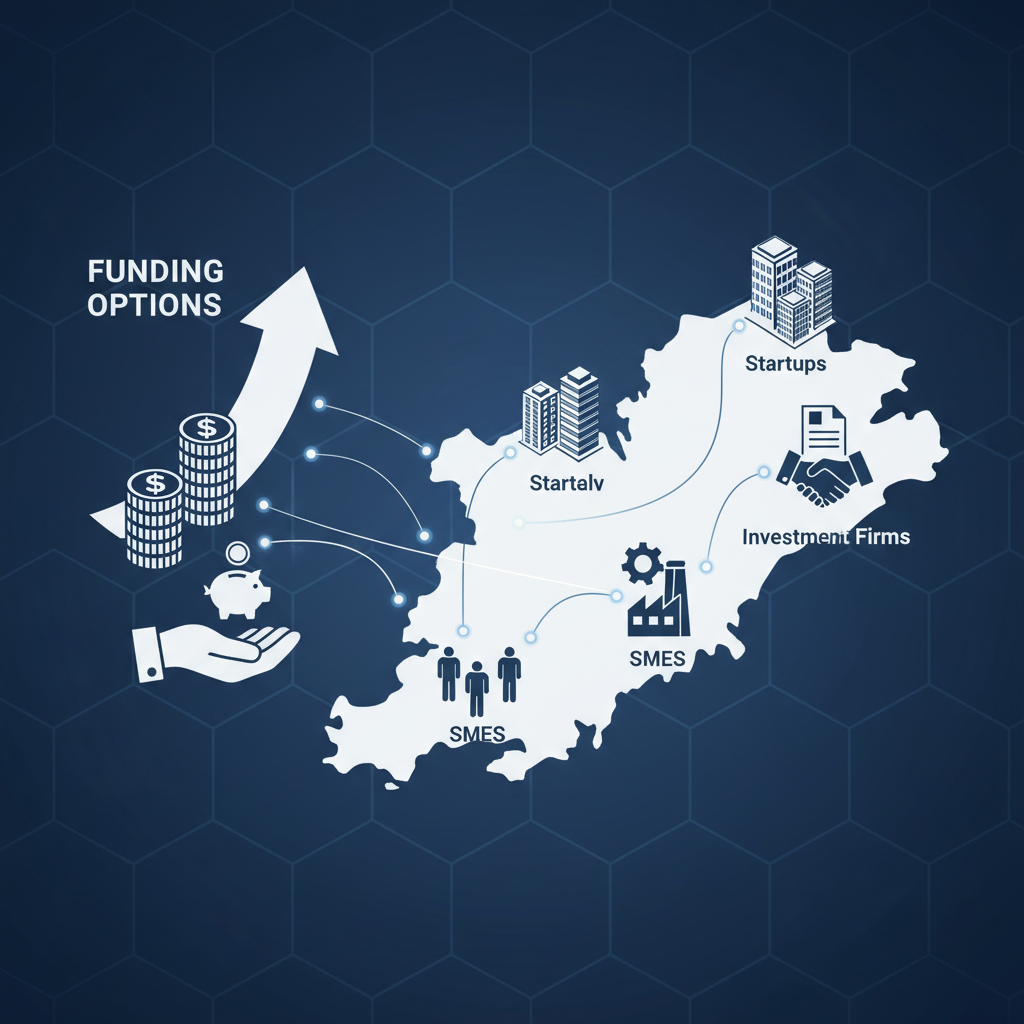
Navigating Funding Options for Startups and SMEs in Dubai (UAE)
Dubai offers a dynamic ecosystem for startups and SMEs, but securing adequate funding remains a critical challenge. This article explores a comprehensive range of funding avenues available in the UAE, from traditional banking to innovative venture capital and government initiatives, providing entrepreneurs with practical insights to navigate this landscape.

Introduction: Dubai's Thriving Ecosystem and Funding Imperatives
Dubai has firmly established itself as a global hub for innovation, entrepreneurship, and business growth. Its strategic location, world-class infrastructure, business-friendly policies, and diverse talent pool make it an attractive destination for both nascent startups and established small and medium-sized enterprises (SMEs). However, a common hurdle for businesses, regardless of their stage, is securing appropriate funding to fuel their growth, manage operations, and scale their ambitions. The UAE government, along with private sector entities, has proactively developed a multifaceted funding landscape to support this vital segment of the economy. Understanding these options, their requirements, and the processes involved is paramount for any entrepreneur looking to succeed in this vibrant market.
SMEs are the backbone of the UAE economy, contributing significantly to its GDP and employment. Recognizing this, the government has implemented various initiatives to foster their development, including easier access to finance. This article delves into the diverse funding options available to startups and SMEs in Dubai, offering practical insights into each category, regulatory considerations, and strategic advice for entrepreneurs.
Traditional Funding Channels: Banking and Debt Finance
Traditional banking remains a primary source of capital for many SMEs, particularly those with a proven track record and stable cash flow. Dubai hosts a plethora of local and international banks, each offering a range of products tailored for businesses.
Commercial Bank Loans
Commercial banks provide various types of loans, including working capital loans, term loans, and overdraft facilities. Working capital loans are designed to cover day-to-day operational expenses, while term loans are typically used for larger investments like equipment purchase or business expansion, repaid over a fixed period. Overdrafts offer flexibility for short-term cash flow gaps.
Key Considerations:
- Eligibility: Banks typically require a minimum operating history (often 1-3 years), audited financial statements, a strong business plan, and collateral. For startups, securing a traditional loan can be challenging without significant assets or a robust revenue stream.
- Documentation: Extensive documentation is required, including trade license, memorandum of association, financial statements, bank statements, business plan, and personal guarantees from shareholders.
- Cost: Interest rates vary based on the bank, the borrower's creditworthiness, the loan amount, and the tenure. Processing fees and other charges also apply.
- Process: The application process can be lengthy, often taking several weeks to months, involving detailed due diligence by the bank.
Government-Backed Loan Schemes
To mitigate the risks associated with lending to SMEs, the UAE government, through entities like the Emirates Development Bank (EDB) and the Mohammed Bin Rashid Establishment for SME Development (Dubai SME), offers various guarantee schemes and direct lending programs. These programs often aim to provide more accessible and affordable financing by sharing the risk with commercial banks.
EDB's Role: EDB focuses on financing projects that contribute to the UAE's economic diversification agenda, particularly in sectors like manufacturing, technology, healthcare, and food security. They offer direct financing and credit guarantee schemes in partnership with commercial banks, making it easier for SMEs to secure loans by reducing the banks' exposure.
Dubai SME: This entity supports Emirati entrepreneurs and SMEs by offering financial assistance, advisory services, and incubation programs. While primarily focused on national businesses, their initiatives often create a more supportive ecosystem for all SMEs.
Equity Financing: Fueling High-Growth Ventures
For startups and high-growth SMEs, particularly those in technology or innovative sectors, equity financing is often the preferred route. This involves exchanging a stake in the company for capital, providing non-dilutive capital in the short term but diluting ownership.
Angel Investors
Angel investors are high-net-worth individuals who invest their personal capital into early-stage startups in exchange for equity. They often bring not only capital but also invaluable mentorship, industry connections, and strategic advice. Dubai has a growing network of angel investors, often connected through formal groups or informal networks.
Key Considerations:
- Stage: Typically invest in seed or pre-seed rounds.
- Process: Often involves pitching, networking, and demonstrating strong potential for growth and a clear exit strategy.
- Benefits: Beyond capital, angels provide experience and connections.
Venture Capital (VC) Funds
Dubai's VC landscape has matured significantly over the past decade. Numerous local and international VC firms operate in the region, actively seeking promising startups with scalable business models and strong management teams. Examples include BECO Capital, Wamda Capital, and Shorooq Partners.
Key Considerations:
- Stage: VCs typically invest in later seed, Series A, B, and beyond, looking for companies with validated products, market traction, and clear growth metrics.
- Due Diligence: The due diligence process is rigorous, involving deep dives into financials, market analysis, team capabilities, intellectual property, and legal structures.
- Terms: Investment terms are complex and involve valuation, equity stake, board seats, liquidation preferences, and other protective clauses for investors.
- Process: Requires a compelling pitch deck, detailed financial projections, and often multiple rounds of meetings and negotiations.
Corporate Venture Capital (CVC)
Large corporations in Dubai are increasingly establishing CVC arms to invest in startups that align with their strategic objectives or offer synergistic technologies. This can provide not only capital but also access to corporate resources, customer bases, and market expertise.
Alternative and Emerging Funding Options
Beyond traditional and equity routes, several alternative funding mechanisms are gaining traction in Dubai.
Crowdfunding
Crowdfunding platforms allow businesses to raise capital from a large number of individuals, typically via online platforms. The UAE has specific regulations for crowdfunding, particularly for equity-based crowdfunding, overseen by the Securities and Commodities Authority (SCA) and financial free zones like the Dubai International Financial Centre (DIFC) and Abu Dhabi Global Market (ADGM).
Types:
- Equity Crowdfunding: Investors receive shares in the company.
- Debt Crowdfunding (P2P Lending): Investors lend money in exchange for interest.
- Reward-Based Crowdfunding: Customers pre-order products or services.
Regulations: Platforms must be licensed by the relevant financial regulator. This ensures investor protection and transparency.
Government Grants and Incubator/Accelerator Programs
Dubai's government actively supports innovation through grants and various incubator and accelerator programs. Entities like Dubai Future Foundation, Dubai Internet City, and in5 offer mentorship, co-working spaces, and sometimes seed funding or grants to promising startups.
Key Programs:
- in5: Offers state-of-the-art facilities, mentorship, and a vibrant community for tech, media, and design startups, often facilitating access to investors.
- Dubai Future Accelerators: Connects government entities with leading startups to co-create solutions for future challenges, often involving pilot projects and potential government contracts.
- Mohammed Bin Rashid Establishment for SME Development (Dubai SME): Provides a range of support services, including financial incentives and business development programs for Emirati entrepreneurs.
Factoring and Invoice Discounting
For businesses with significant accounts receivable, factoring and invoice discounting can provide immediate cash flow. Factoring involves selling outstanding invoices to a third party (a 'factor') at a discount, while invoice discounting allows businesses to borrow against their invoices.
Benefits: Improves liquidity without incurring debt or diluting equity.
Navigating the Funding Landscape: Practical Advice
Securing funding in Dubai requires preparation, persistence, and a clear understanding of the local ecosystem.
Develop a Robust Business Plan
A well-articulated business plan is non-negotiable. It must clearly outline your value proposition, market analysis, competitive advantage, revenue model, financial projections, and team capabilities. Tailor your plan to the specific type of investor or lender you are approaching.
Understand Regulatory Requirements
Dubai's regulatory environment is sophisticated. Ensure your company is properly registered, compliant with all local laws, and has clear legal structures. For equity funding, understanding shareholder agreements, valuation methodologies, and intellectual property protection is crucial. For debt, be aware of collateral requirements and personal guarantee implications.
Network Extensively
Dubai is a relationship-driven market. Attend industry events, startup conferences, and investor forums. Connect with incubators, accelerators, and mentorship programs. Building a strong network can open doors to potential investors and strategic partners.
Financial Preparedness
Maintain impeccable financial records. Investors and lenders will scrutinize your financials, including profit and loss statements, balance sheets, and cash flow projections. Be realistic with your projections and be able to justify your assumptions.
Legal and Financial Advisory
Engage experienced legal and financial advisors who understand the UAE market. They can assist with due diligence, term sheet negotiations, and ensuring compliance with local regulations, saving significant time and potential pitfalls.
Conclusion
Dubai offers a diverse and evolving funding landscape for startups and SMEs, reflecting its commitment to fostering a dynamic business environment. From traditional bank loans and government-backed schemes to the increasingly sophisticated world of venture capital, angel investing, and alternative financing methods like crowdfunding, entrepreneurs have multiple avenues to explore. Success in securing funding hinges on a clear understanding of each option's requirements, meticulous preparation of business plans and financial projections, adherence to regulatory frameworks, and proactive networking within the ecosystem. By strategically navigating these options, startups and SMEs in Dubai can unlock the capital necessary to innovate, grow, and contribute to the emirate's economic prosperity, solidifying its position as a global innovation hub. The journey to funding may be challenging, but with the right approach and resources, the opportunities in Dubai are immense.