Navigating Foreign Exchange Regulations and Currency Controls in Germany: A Business Guide
Germany, a cornerstone of the European Union and the Eurozone, maintains a highly liberal approach to foreign exchange and currency controls. This article provides a comprehensive overview of the regulatory framework, key reporting requirements, and practical implications for businesses operating in or with Germany, ensuring compliance and facilitating smooth international transactions.
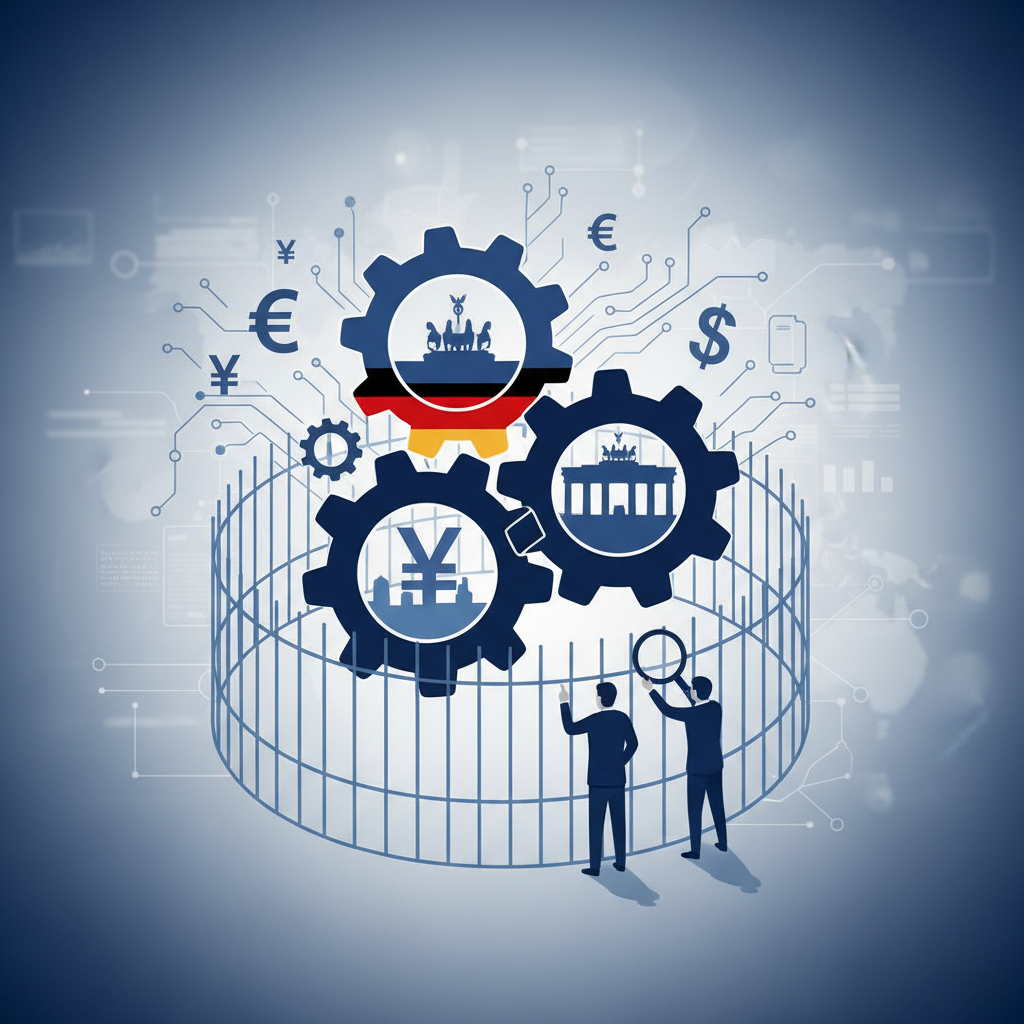
Germany, as a leading economy within the European Union (EU) and a member of the Eurozone, operates under a highly liberal and open economic policy, particularly concerning foreign exchange and capital movements. Unlike many other nations that impose stringent currency controls, Germany's regulatory framework is largely shaped by EU directives and the principles of free movement of capital, goods, services, and people. This article aims to provide entrepreneurs and business professionals with a detailed understanding of the foreign exchange regulations and currency controls in Germany, highlighting key considerations for international business operations.
Overview of Germany's Foreign Exchange Policy
Germany's foreign exchange policy is fundamentally aligned with the EU's commitment to a single market and the free flow of capital. This means that, for the most part, there are no significant restrictions on converting currencies, transferring funds into or out of Germany, or holding foreign currency accounts. The Euro (EUR) is the national currency, and all transactions within Germany are typically conducted in EUR. However, businesses frequently engage in transactions involving other currencies, necessitating an understanding of the underlying regulatory environment.
The primary legislative framework governing financial transactions in Germany includes the German Foreign Trade and Payments Act (Außenwirtschaftsgesetz – AWG) and the German Foreign Trade and Payments Ordinance (Außenwirtschaftsverordnung – AWV). These laws, while generally promoting free capital movement, also incorporate provisions for reporting certain transactions to the Deutsche Bundesbank (Germany's central bank) for statistical purposes and for enforcing international sanctions. It is crucial to distinguish between currency controls, which restrict the movement or conversion of currency, and reporting obligations, which are purely for data collection and monitoring.
Role of the Deutsche Bundesbank
The Deutsche Bundesbank plays a central role in monitoring international financial flows. While it does not impose currency controls in the traditional sense, it is responsible for collecting data on cross-border payments and capital transactions. This data is vital for compiling Germany's balance of payments statistics and for economic analysis. Businesses are primarily affected by the Bundesbank's reporting requirements, which are designed to ensure transparency without impeding legitimate financial activities.
Key Reporting Requirements for Cross-Border Transactions
Despite the absence of stringent currency controls, businesses engaging in cross-border financial transactions with Germany must be aware of specific reporting obligations. These requirements are primarily outlined in the AWV and apply to both residents and non-residents of Germany.
Reporting Thresholds and Forms
The most significant reporting obligation for businesses involves payments exceeding certain thresholds. Currently, any payment received from or made to a foreign entity that exceeds 12,500 EUR (or its equivalent in another currency) must be reported to the Deutsche Bundesbank. This applies to both current account transactions (e.g., trade in goods and services, income from investments) and capital account transactions (e.g., direct investments, portfolio investments, loans).
The reporting is typically done electronically through the Bundesbank's General Statistics Reporting Portal (Allgemeines Meldeportal Statistik – AMS). The specific form to be used depends on the nature of the transaction:
- Form Z4: Used for reporting payments received from or made to non-residents that exceed 12,500 EUR. This form covers a wide range of transactions, including trade, services, and financial transfers.
- Form Z5: Used by banks to report certain cross-border payments on behalf of their customers, though businesses typically handle their own Z4 reporting.
- Forms K3/K4: Used for reporting direct investments and certain other capital transactions.
Reports must generally be submitted by the 7th calendar day of the following month after the transaction occurred. Failure to comply with these reporting obligations can result in fines, although the Bundesbank often prioritizes education and assistance for first-time offenders.
Exemptions and Special Cases
It is important to note that certain transactions are exempt from the 12,500 EUR reporting threshold. These include:
- Payments related to imports and exports of goods, where the payment is handled by a German credit institution and the goods are physically crossing the German border (these are typically reported by the banks).
- Payments that are part of a continuous payment stream, where individual payments are below the threshold but the aggregate amount over a period exceeds it. However, if a single payment exceeds 12,500 EUR, it must be reported.
Businesses involved in complex international financing or large-scale cross-border investments should consult with financial advisors or legal experts to ensure full compliance with all relevant reporting requirements.
Impact on International Business Operations
The liberal foreign exchange regime in Germany significantly benefits international businesses. The absence of currency conversion restrictions, repatriation limits, or significant capital controls simplifies financial planning and execution for companies operating across borders.
Ease of Fund Transfers
Businesses can freely transfer funds into and out of Germany for various purposes, including:
- Repatriation of profits: Foreign investors can repatriate dividends, profits, and capital gains without restrictions.
- Intercompany loans: German subsidiaries can receive or provide loans to parent companies or affiliates abroad.
- Trade finance: Payments for imports and exports can be made and received in any major currency, with easy conversion to EUR.
This ease of transfer reduces operational complexities and costs associated with managing international cash flows, making Germany an attractive location for foreign direct investment.
Currency Risk Management
While Germany does not impose currency controls, businesses are still exposed to currency exchange rate fluctuations. Companies engaging in international trade or investment should implement robust currency risk management strategies. This includes using financial instruments such as forward contracts, options, and currency swaps to hedge against adverse movements in exchange rates. German financial institutions offer a wide range of sophisticated hedging products to mitigate these risks.
Compliance with Anti-Money Laundering (AML) and Sanctions
While foreign exchange is largely unregulated, Germany, like all EU member states, has stringent Anti-Money Laundering (AML) and Counter-Terrorist Financing (CTF) regulations. Financial institutions are obligated to conduct due diligence on their customers and report suspicious transactions to the relevant authorities (e.g., the Financial Intelligence Unit – FIU Germany). Businesses must also ensure that their transactions comply with all international sanctions regimes enforced by the EU and the United Nations. This involves screening counterparties and destinations against sanctions lists. Non-compliance can lead to severe penalties, including fines and imprisonment.
Practical Advice for Businesses
For businesses operating in or with Germany, understanding and adhering to the foreign exchange regulations, primarily reporting obligations, is paramount. Here are some practical tips:
- Automate Reporting: For businesses with frequent cross-border transactions exceeding the 12,500 EUR threshold, consider automating the data collection and reporting process to the Bundesbank's AMS portal. Many accounting software solutions can be integrated or adapted for this purpose.
- Maintain Meticulous Records: Keep detailed records of all international transactions, including invoices, contracts, bank statements, and any correspondence related to the payments. This will facilitate accurate reporting and provide evidence in case of an audit.
- Stay Updated: Regulations, especially concerning sanctions and AML, can change. Regularly check the Deutsche Bundesbank's website and consult with legal or financial experts to stay informed about any updates to reporting requirements or foreign trade laws.
- Engage Professional Advisors: For complex international structures, significant investments, or high-volume cross-border trade, engaging German tax advisors, legal counsel, or financial consultants specializing in foreign trade law can provide invaluable guidance and ensure compliance.
- Understand Your Bank's Role: While businesses are responsible for their own Z4 reporting, banks play a role in certain aspects of foreign exchange. Understand what your bank reports on your behalf and what remains your direct responsibility.
Conclusion
Germany's foreign exchange regulations are characterized by a strong commitment to the free movement of capital, reflecting its role as a major global trading nation and a core member of the Eurozone. While there are no significant currency controls that restrict the flow of funds, businesses must diligently comply with the reporting obligations to the Deutsche Bundesbank for statistical purposes. Understanding these requirements, particularly the 12,500 EUR threshold for cross-border payments and the associated reporting forms, is crucial for smooth and compliant international operations. By adhering to these regulations and maintaining robust internal processes, businesses can fully leverage Germany's open economic environment and thrive in the European and global markets, while also fulfilling their responsibilities regarding AML and sanctions compliance. The absence of restrictive currency controls makes Germany an exceptionally attractive and straightforward jurisdiction for international financial activities, provided the statistical reporting duties are met accurately and on time.