
Navigating Danish Waters: A Comprehensive Guide to Company Formation in Denmark
Denmark, consistently ranked among the easiest places to do business, offers an attractive environment for entrepreneurs. This article provides a detailed guide to the requirements and processes for establishing a company in Denmark, covering legal structures, registration, and ongoing compliance.
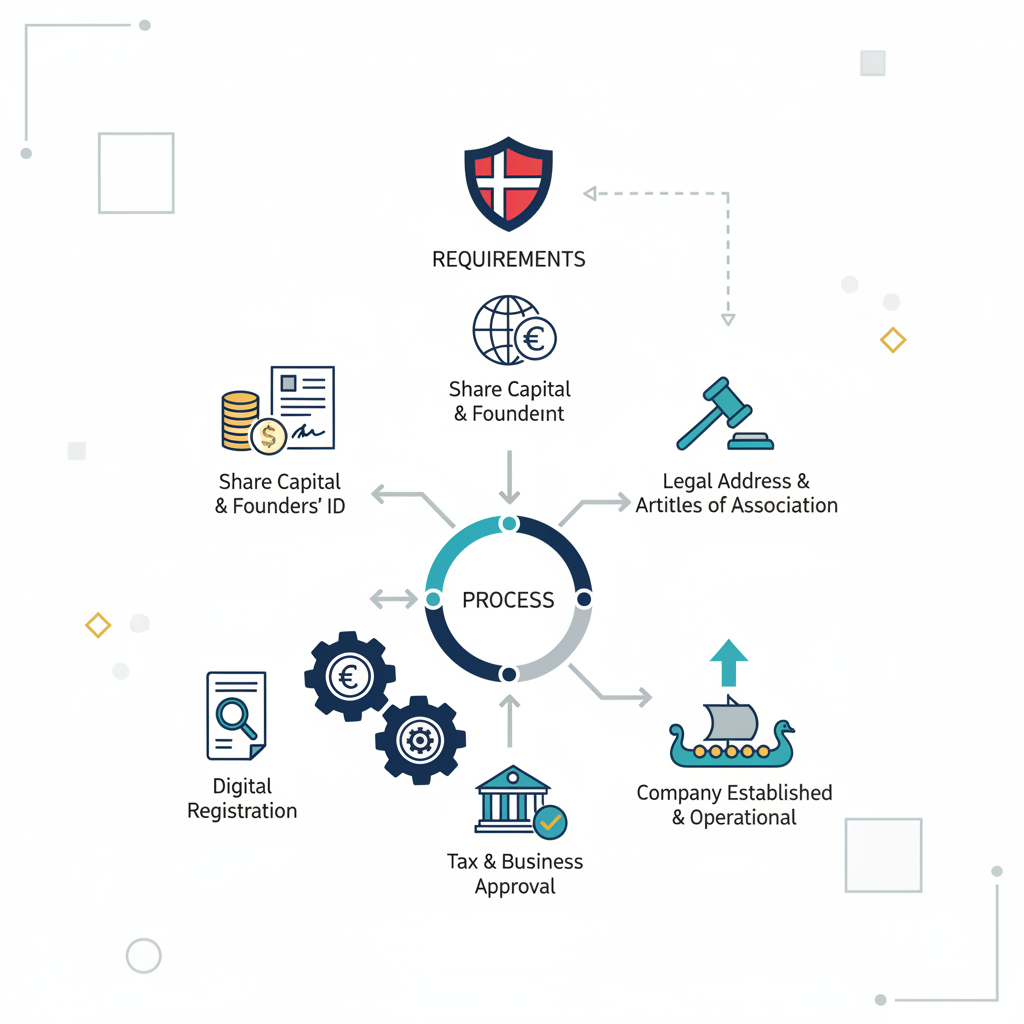
Navigating Danish Waters: A Comprehensive Guide to Company Formation in Denmark
Denmark has long been recognized as a beacon of business efficiency and innovation, consistently ranking high in global indices for ease of doing business. Its stable economy, highly skilled workforce, digital infrastructure, and transparent regulatory environment make it an appealing destination for both domestic and international entrepreneurs looking to establish a presence in the European market. However, successfully navigating the company formation process requires a clear understanding of the legal requirements, available business structures, and administrative procedures. This comprehensive guide aims to demystify the journey of establishing a company in Denmark.
1. Choosing the Right Legal Structure
The first critical step in forming a company in Denmark is selecting the appropriate legal structure. This decision has significant implications for liability, taxation, administrative burden, and capital requirements. The most common business forms include:
1.1. Private Limited Company (Anpartsselskab - ApS)
The ApS is the most popular choice for small and medium-sized enterprises (SMEs) due to its limited liability protection for shareholders. It requires a minimum share capital of DKK 40,000 (approximately EUR 5,300), which can be contributed in cash or assets. An ApS must have a board of directors or a management board, and at least one director must be a resident of Denmark or an EU/EEA country. This structure offers flexibility and is relatively straightforward to manage.
1.2. Public Limited Company (Aktieselskab - A/S)
An A/S is suitable for larger businesses seeking to raise significant capital, often through public offerings. It requires a much higher minimum share capital of DKK 400,000 (approximately EUR 53,000). An A/S must have both a management board and a supervisory board, or a combined board of directors. At least half of the board members must be residents of Denmark or an EU/EEA country. This structure is more complex and subject to stricter regulatory oversight.
1.3. Sole Proprietorship (Enkeltmandsvirksomhed)
For individual entrepreneurs, the sole proprietorship is the simplest and least expensive option. There is no minimum capital requirement, and the owner has full control over the business. However, the owner is personally liable for all business debts and obligations, meaning personal assets are not protected. This structure is often chosen for small-scale operations or freelancers.
1.4. Branch Office (Filial)
A foreign company can establish a branch office in Denmark. A branch office is not a separate legal entity but an extension of the parent company. The parent company is fully liable for the branch's obligations. This option is suitable for companies that wish to test the Danish market or conduct specific activities without forming a new Danish legal entity.
2. Key Requirements for Company Registration
Once the legal structure is chosen, several essential requirements must be met before and during the registration process with the Danish Business Authority (Erhvervsstyrelsen).
2.1. Company Name and Address
The chosen company name must be unique and not misleading. It must be distinguishable from existing registered names. A registered business address in Denmark is mandatory for all company types, even if it's a virtual office initially.
2.2. Capital Contribution and Bank Account
For ApS and A/S companies, the minimum share capital must be paid into a Danish bank account or an account within the EU/EEA. Proof of this capital contribution, usually in the form of a bank statement or auditor's confirmation, is required during registration.
2.3. Management and Statutory Documents
All companies must have a management structure in place. For ApS and A/S, this involves appointing directors and potentially a supervisory board. Articles of Association (vedtægter) are crucial statutory documents outlining the company's purpose, share capital, management structure, and other key operational rules. These must be drafted in Danish or accompanied by a certified Danish translation.
2.4. Digital Signature (NemID/MitID)
Denmark operates a highly digitized public administration. A Danish NemID or MitID (digital signature) is essential for interacting with government agencies, including the Danish Business Authority. Foreign founders or directors may need to obtain a CPR number (civil registration number) to acquire a NemID/MitID, or they can use a professional service provider with a digital signature to handle the registration on their behalf.
3. The Registration Process
The registration process in Denmark is streamlined and largely digital, making it relatively quick compared to many other countries.
3.1. Online Registration via Virk.dk
The primary platform for company registration is Virk.dk, the official portal for businesses in Denmark. Most company types can be registered online through this portal. The process typically involves:
- Drafting Articles of Association: Preparing the company's foundational legal document.
- Capital Deposit: Depositing the required share capital into a bank account.
- Online Application: Completing the online registration form on Virk.dk, uploading necessary documents, and providing details of the company, its owners, and management.
- CPR/CVR Number: Upon successful registration, the company will receive a CVR number (Central Business Register number), which is its unique identification number. Individuals involved will also need a CPR number.
3.2. Professional Assistance
While the process is designed to be user-friendly, many international entrepreneurs opt for professional assistance from lawyers, accountants, or specialized company formation agents. These professionals can help with drafting articles, ensuring compliance, handling communication with authorities, and navigating any complexities, especially for non-Danish speakers or those unfamiliar with Danish legal nuances.
3.3. Post-Registration Steps
After successful registration, several post-registration steps are necessary:
- VAT Registration: If the company will be conducting VAT-liable activities, it must register for VAT (Moms). This can often be done simultaneously with company registration.
- Employer Registration: If the company plans to hire employees, it must register as an employer with the Danish Tax Agency (Skattestyrelsen).
- Bank Account Activation: The company's bank account, initially used for capital deposit, needs to be fully activated for day-to-day business operations.
- Insurance: Obtaining relevant business insurance policies is crucial for risk management.
4. Ongoing Compliance and Obligations
Establishing a company is just the first step; maintaining compliance with Danish regulations is vital for long-term success.
4.1. Accounting and Auditing
All Danish companies must maintain proper accounting records in accordance with the Danish Bookkeeping Act. The specific auditing requirements depend on the company's size and legal form. Larger ApS and all A/S companies are typically required to have their annual financial statements audited by a state-authorized public accountant.
4.2. Taxation
Denmark has a corporate tax rate of 22%. Companies are also subject to VAT, payroll taxes, and potentially other specific taxes depending on their industry and activities. Accurate and timely tax filings are mandatory.
4.3. Annual Reporting
Companies must submit annual financial statements to the Danish Business Authority. The deadline for submission is typically five months after the end of the financial year. Failure to comply can result in fines and, in severe cases, forced dissolution.
4.4. General Data Protection Regulation (GDPR)
As an EU member, Denmark strictly adheres to GDPR. Companies must ensure their data processing activities comply with these regulations, particularly concerning customer and employee data.
Conclusion
Forming a company in Denmark offers a gateway to a dynamic and prosperous market. While the process is designed for efficiency, a thorough understanding of the legal structures, capital requirements, registration procedures, and ongoing compliance obligations is essential. By carefully planning and, if necessary, leveraging professional expertise, entrepreneurs can successfully establish their business in Denmark and capitalize on its robust economic environment and supportive business ecosystem. The digital nature of Danish administration significantly simplifies many steps, making it an attractive choice for those seeking a smooth entry into the European business landscape. Navigating these requirements diligently will set a strong foundation for sustainable growth and success in the Danish market.


