Navigating Annual Compliance: A Comprehensive Guide for Hong Kong Companies
Understanding and fulfilling annual compliance obligations is paramount for companies registered in Hong Kong. This article provides a detailed overview of the key regulatory requirements, processes, and timelines to ensure businesses maintain good standing and avoid penalties.
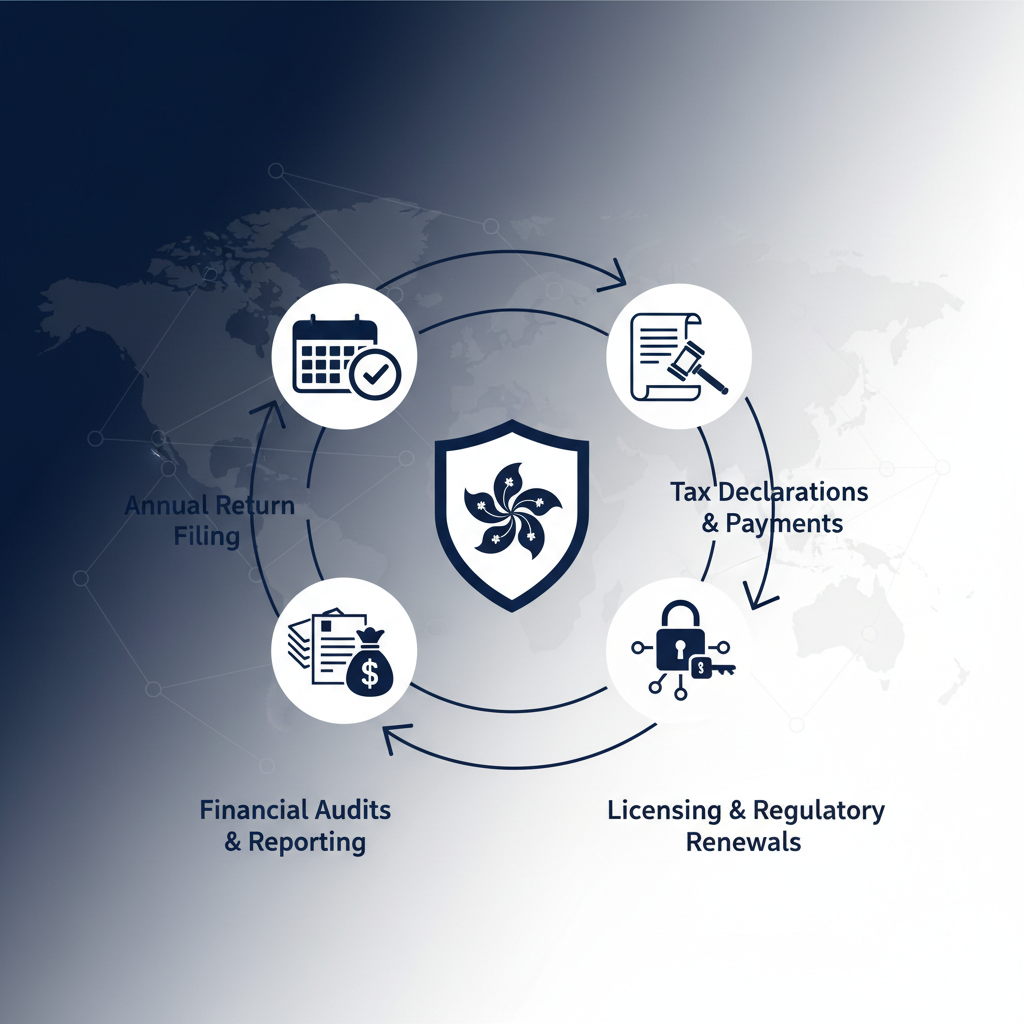
Hong Kong, renowned for its business-friendly environment and strategic location, attracts countless entrepreneurs and international corporations. However, maintaining a company in Hong Kong necessitates strict adherence to a range of annual compliance obligations. These requirements, encompassing company secretarial duties, financial reporting, auditing, and tax filings, are crucial for ensuring legal operation, transparency, and good corporate governance. Failure to comply can lead to significant penalties, reputational damage, and even legal action. This comprehensive guide delves into the essential annual compliance requirements for Hong Kong registered companies, offering practical insights for business owners and professionals.
The Bedrock of Compliance: Company Secretarial Duties
At the heart of Hong Kong's corporate compliance framework lies the role of the company secretary. Every private limited company incorporated in Hong Kong is legally required to appoint a company secretary, who must be either a natural person ordinarily residing in Hong Kong or a body corporate with its registered office or place of business in Hong Kong. This individual or entity acts as the primary liaison between the company and the Companies Registry (CR), ensuring all statutory records are meticulously maintained and timely filings are made.
Key annual company secretarial duties include:
Annual Return Filing
One of the most fundamental obligations is the filing of an Annual Return (Form AR1) with the Companies Registry. This document provides an updated snapshot of the company's information, including its registered office address, share capital, shareholders, directors, and company secretary. For private companies limited by shares, the Annual Return must be filed within 42 days after the anniversary of its incorporation. Public companies have a different deadline, requiring filing within 42 days after the company's annual general meeting (AGM) or within 42 days after the date of the written resolution passed in lieu of the AGM. Late filing incurs escalating penalty fees, ranging from HK$870 for up to 42 days late to HK$4,800 for over 9 months late. Persistent non-compliance can even lead to prosecution of the company and its responsible officers.
Maintaining Statutory Records
Companies are mandated to maintain various statutory registers at their registered office or a designated place. These include the Register of Members, Register of Directors, Register of Company Secretaries, Register of Charges, and the Significant Controllers Register (SCR). The SCR, introduced to enhance transparency and combat money laundering, requires companies to identify and keep a register of their significant controllers. This register must be accessible for inspection by law enforcement agencies upon request. Any changes to the company's particulars, such as director appointments or resignations, share transfers, or changes to the registered office, must be updated in these registers and reported to the Companies Registry through specific forms (e.g., Form ND2A for director changes, Form ND2B for company secretary changes) within 15 days of the change.
Financial Reporting and Auditing Requirements
Hong Kong's regulatory environment places significant emphasis on transparent financial reporting. All companies incorporated under the Companies Ordinance are required to prepare financial statements and, with some exceptions, have them audited annually.
Preparation of Financial Statements
Companies must prepare financial statements that comply with the Hong Kong Financial Reporting Standards (HKFRS) or Small and Medium-sized Entity Financial Reporting Standard (SME-FRS), as applicable. These statements typically include a statement of financial position (balance sheet), a statement of comprehensive income (profit and loss account), a statement of cash flows, a statement of changes in equity, and explanatory notes. The directors are responsible for ensuring these statements present a true and fair view of the company's financial performance and position.
Annual Audit
With very few exceptions (primarily for dormant companies or specific types of small private companies that meet certain exemption criteria), all Hong Kong companies are required to have their annual financial statements audited by a certified public accountant (CPA) holding a practicing certificate in Hong Kong. The auditor's role is to express an independent opinion on whether the financial statements are prepared, in all material respects, in accordance with the applicable financial reporting framework and give a true and fair view. The audited financial statements, along with the auditor's report, are then presented to the shareholders at the Annual General Meeting (AGM).
Annual General Meeting (AGM)
Every company is required to hold an AGM within nine months after the end of its accounting reference period (for private companies) or within six months (for public companies). The primary purpose of the AGM is to present and approve the audited financial statements, appoint auditors, and elect directors. While AGMs are mandatory, private companies can dispense with holding an AGM if all members agree in writing. However, the audited financial statements must still be circulated to members.
Tax Compliance: Profits Tax Filing
Hong Kong operates a territorial tax system, meaning only profits arising in or derived from Hong Kong are subject to Profits Tax. The Inland Revenue Department (IRD) is responsible for tax administration, and companies must adhere to specific annual tax filing obligations.
Profits Tax Return (PTR)
Companies are required to file an annual Profits Tax Return (Form BIR51) with the IRD. The first Profits Tax Return is typically issued by the IRD approximately 18 months after the date of incorporation. Subsequent returns are issued annually. The deadline for filing the PTR depends on the company's accounting year-end. Generally, companies with a 31 March year-end have until 31 July, while those with a 31 December year-end have until 30 April of the following year. These deadlines can be extended by applying for an extension through a tax representative or by joining the Block Extension Scheme.
Supporting Documents
The Profits Tax Return must be accompanied by the audited financial statements, a tax computation showing how the assessable profits (or adjusted loss) were arrived at, and other supporting schedules. Even if a company has not commenced business or has generated no profits, a 'nil' return must still be filed, along with the audited financial statements (unless dormant). Failure to file a Profits Tax Return by the due date can result in penalties, estimated assessments, and even prosecution.
Other Important Considerations
Beyond the core obligations, companies should also be mindful of other compliance aspects:
Business Registration Certificate Renewal
Every company operating in Hong Kong must obtain and annually renew a Business Registration Certificate (BRC) from the Business Registration Office. The BRC is typically issued for one year or three years. Renewal notices are usually sent out by the IRD approximately one month before the expiry date. Failure to renew the BRC on time can lead to penalties and legal action.
Employer's Returns
If a company employs staff in Hong Kong, it must file an annual Employer's Return (Form BIR56A and BIR56B) with the IRD, detailing employees' remuneration and benefits for the preceding year. This is due by the end of April each year. Companies also have obligations regarding MPF contributions and employee compensation insurance.
Anti-Money Laundering (AML) Compliance
Hong Kong has a robust AML regime. While not an 'annual' filing in the traditional sense, companies, especially those in regulated sectors, must continuously monitor and update their AML policies and procedures, conduct customer due diligence, and report suspicious transactions. All companies, through their company secretaries, are required to maintain a Significant Controllers Register, which is part of the broader AML efforts.
Conclusion
Navigating the annual compliance landscape in Hong Kong requires diligence and a clear understanding of the regulatory framework. From the timely filing of Annual Returns and meticulous maintenance of statutory records to the preparation of audited financial statements and accurate tax submissions, each obligation plays a vital role in ensuring a company's legal standing and operational integrity. Engaging with experienced professionals, such as company secretaries, accountants, and tax advisors, can significantly streamline these processes, mitigate risks, and allow business owners to focus on core operations. By proactively addressing these annual requirements, companies in Hong Kong can uphold their good standing, avoid penalties, and foster a reputation for transparency and responsible corporate governance, ultimately contributing to their long-term success in this dynamic global hub.