
Germany Company Formation: A Comprehensive Guide to Business Entities
Navigating the landscape of German company formation requires a thorough understanding of the various legal structures available. This article provides an in-depth look at the most common business entities, their characteristics, regulatory requirements, and suitability for different entrepreneurial ventures, helping international investors make informed decisions.
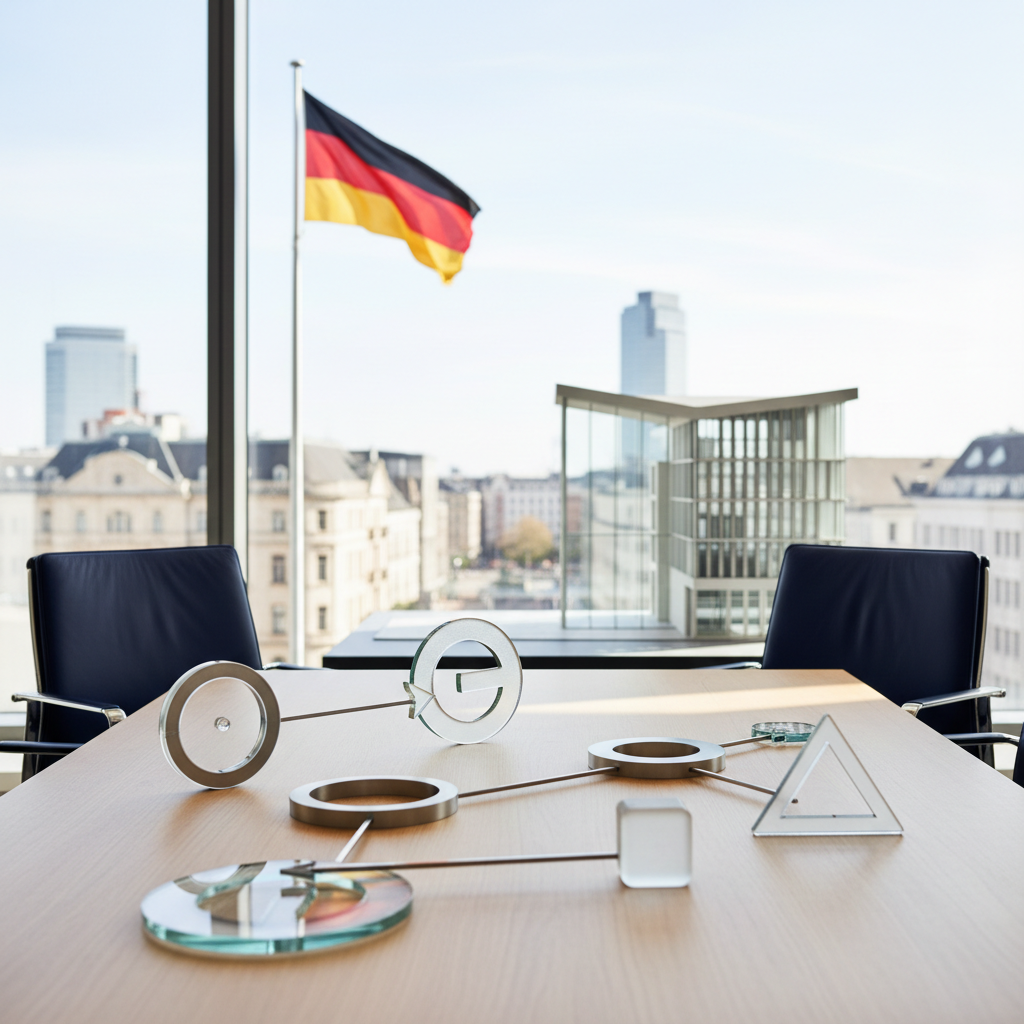
Germany Company Formation: A Comprehensive Guide to Business Entities
Germany, with its robust economy, strategic location in the heart of Europe, and highly skilled workforce, remains a prime destination for entrepreneurs and international businesses looking to expand their global footprint. However, successfully establishing a presence in this dynamic market hinges significantly on choosing the right legal form for your business. This decision impacts everything from liability and taxation to administrative burden and financing options. Understanding the various German business entities is therefore paramount for a smooth and compliant company formation process.
Key Considerations Before Choosing a Business Entity
Before delving into the specifics of each legal form, prospective founders should consider several critical factors. These include the number of founders involved (single entrepreneur vs. multiple partners), the desired level of personal liability, the capital required for setup, the preferred tax treatment, administrative complexity, and future growth aspirations. German company law is precise, and selecting an entity that aligns with your business goals and risk appetite is crucial for long-term success.
Personal Liability
One of the most significant distinctions between business entities is the extent of personal liability. Some forms, like sole proprietorships and partnerships, expose the founders' personal assets to business debts. In contrast, corporate forms offer limited liability, protecting personal wealth.
Capital Requirements
Minimum share capital requirements vary widely. While some entities can be established with no formal capital, others demand substantial initial investments, which can be a barrier for some startups.
Taxation
Taxation differs based on the legal form. Partnerships are generally transparent for tax purposes, with profits taxed at the individual partner level. Corporations, however, are subject to corporate income tax (Körperschaftsteuer) on their profits, in addition to trade tax (Gewerbesteuer) and potentially solidarity surcharge (Solidaritätszuschlag). Dividends distributed to shareholders are then subject to capital gains tax.
Administrative Burden and Complexity
Simpler structures typically entail less administrative overhead, fewer reporting obligations, and lower formation costs. More complex corporate structures, while offering benefits like limited liability, come with increased regulatory compliance, stricter accounting standards, and higher ongoing administrative expenses.
Common Business Entities in Germany
Germany offers a range of business entities, broadly categorised into sole proprietorships, partnerships, and corporations. Each category serves different business needs and risk profiles.
1. Sole Proprietorship (Einzelunternehmen)
An Einzelunternehmen is the simplest and most common legal form for single entrepreneurs. It requires no minimum capital and is quick to set up, often just by registering with the local trade office (Gewerbeamt). The owner is fully liable for all business debts with their personal assets. Profits are taxed as personal income. This structure is ideal for freelancers, small businesses, and individuals testing a new business idea due to its low cost and minimal administrative burden.
- Key Features: Single owner, no minimum capital, unlimited personal liability, simple registration.
- Pros: Easy and inexpensive to set up, minimal bureaucracy, full control for the owner.
- Cons: Unlimited personal liability, difficulty in raising capital, limited scalability.
2. Partnerships
Partnerships involve two or more individuals or legal entities collaborating in a business. German law distinguishes between various partnership forms, with the most common being the GbR, OHG, and KG.
a. Civil Law Partnership (Gesellschaft bürgerlichen Rechts - GbR)
This is the simplest form of partnership, suitable for small ventures or collaborations between professionals (e.g., a group of freelance consultants). It does not require registration in the commercial register. All partners have unlimited personal liability and share profits and losses equally, unless otherwise stipulated in a partnership agreement.
- Key Features: Two or more partners, no minimum capital, unlimited personal liability for all partners, no commercial register entry required.
- Pros: Easy to form, flexible structure, low administrative costs.
- Cons: Unlimited personal liability for all partners, limited scalability, potential for disputes without a clear agreement.
b. General Partnership (Offene Handelsgesellschaft - OHG)
An OHG is designed for commercial businesses where all partners are fully liable with their personal assets. It requires registration in the commercial register (Handelsregister) and is subject to commercial law. This structure is suitable for medium-sized trading businesses or service providers where partners actively participate in management.
- Key Features: Two or more partners, no minimum capital, unlimited personal liability for all partners, commercial register entry required.
- Pros: Relatively easy to set up, good creditworthiness, flexible management structure.
- Cons: Unlimited personal liability, complex decision-making with multiple partners, potential for disputes.
c. Limited Partnership (Kommanditgesellschaft - KG)
A KG comprises two types of partners: at least one general partner (Komplementär) with unlimited personal liability and at least one limited partner (Kommanditist) whose liability is limited to their capital contribution. This structure is often used when some partners want to invest without taking on full liability, or for family businesses transitioning ownership. It also requires commercial register entry.
- Key Features: At least one general partner (unlimited liability) and one limited partner (liability limited to contribution), no minimum capital (for general partner), commercial register entry required.
- Pros: Attracts investors (limited partners), general partners retain control, tax advantages for limited partners.
- Cons: General partner bears full risk, more complex structure than OHG, administrative burden.
3. Corporations
Corporations are legal entities separate from their owners, offering limited liability. They are generally more complex to establish and administer but provide significant advantages for growth and capital raising.
a. Limited Liability Company (Gesellschaft mit beschränkter Haftung - GmbH)
The GmbH is by far the most popular legal form for companies in Germany, including foreign subsidiaries. It offers limited liability to its shareholders, meaning their personal assets are protected from business debts. A minimum share capital of €25,000 is required, with at least half (€12,500) paid up at the time of registration. Formation involves notarisation of the articles of association and registration in the commercial register. The GmbH is suitable for almost all types of businesses, from startups to large enterprises, due to its balance of limited liability and manageable administrative requirements.
- Key Features: Limited liability for shareholders, minimum share capital of €25,000, commercial register entry required, separate legal personality.
- Pros: Limited personal liability, high credibility, flexible structure, suitable for various business sizes, easier to raise capital.
- Cons: Higher formation costs and administrative burden compared to partnerships, strict legal requirements, corporate income tax.
b. Entrepreneurial Company (haftungsbeschränkt) (UG)
The UG, often referred to as a 'mini-GmbH', is a simplified form of the GmbH designed for entrepreneurs who cannot raise the full €25,000 share capital. It can be formed with as little as €1 of share capital. However, UGs are required to retain 25% of their annual net profits as reserves until the €25,000 capital threshold of a standard GmbH is reached, at which point it can be converted. It offers the same limited liability as a GmbH but is subject to specific regulations regarding profit retention.
- Key Features: Limited liability for shareholders, minimum share capital of €1, commercial register entry required, mandatory profit retention.
- Pros: Very low capital requirement, limited personal liability, relatively quick to set up.
- Cons: Mandatory profit retention can limit early growth, lower credibility than a standard GmbH, conversion to GmbH can be complex.
c. Stock Corporation (Aktiengesellschaft - AG)
The AG is designed for large companies, particularly those intending to raise capital from the public markets or with a large number of shareholders. It requires a minimum share capital of €50,000. The AG has a more complex management structure, typically involving a management board (Vorstand) and a supervisory board (Aufsichtsrat). While less common for SMEs, it is the preferred choice for publicly traded companies.
- Key Features: Limited liability for shareholders, minimum share capital of €50,000, commercial register entry required, complex governance structure.
- Pros: Access to public capital markets, high credibility, professional management structure.
- Cons: Very high formation and administrative costs, stringent regulatory compliance, complex governance.
Formation Process and Regulatory Landscape
The general company formation process in Germany involves several steps, regardless of the chosen entity, though the specifics vary:
- Choosing the Legal Form: As discussed, this is the foundational step.
- Drafting Articles of Association/Partnership Agreement: For corporate forms, these must be notarised. For partnerships, a written agreement is highly recommended.
- Capital Contribution: If required, share capital must be deposited into a German bank account.
- Notarisation: For GmbH, UG, and AG, the articles of association must be notarised by a German public notary.
- Commercial Register Entry (Handelsregister): Most commercial entities must be registered. This step makes the company's legal existence public.
- Trade Office Registration (Gewerbeamt): All commercial businesses must register with the local trade office.
- Tax Office Registration (Finanzamt): Obtain a tax number and VAT ID (Umsatzsteuer-Identifikationsnummer).
- Chamber of Commerce and Industry (IHK) / Chamber of Crafts (HWK) Membership: Mandatory for most businesses.
- Social Security Registration: For employers, registration with social security institutions is required.
Timelines can range from a few days for a sole proprietorship to several weeks or months for complex corporate structures like a GmbH or AG, especially if foreign investors are involved requiring additional documentation and translations. Costs also vary significantly, from a few hundred euros for simple registrations to several thousand euros covering notary fees, legal advice, and registration fees for corporations.
Conclusion
Germany offers a diverse array of business entities, each with distinct advantages and disadvantages tailored to different entrepreneurial needs. For individual entrepreneurs, the Einzelunternehmen provides simplicity and direct control. Partnerships like the GbR and OHG facilitate collaboration but come with unlimited personal liability for all partners. The KG offers a hybrid approach, balancing liability and investment. However, for most international investors and scaling businesses, the GmbH stands out as the most popular and versatile choice, offering the critical advantage of limited liability while maintaining a manageable administrative framework. The UG serves as an excellent entry point for startups with limited capital, providing a pathway to a full GmbH. The AG, while complex, is indispensable for large-scale enterprises and public offerings. A thorough understanding of these structures, coupled with professional legal and tax advice, is essential for navigating the German company formation landscape successfully and laying a strong foundation for your business's future growth in this pivotal European market.
Choosing the correct legal form is not merely a bureaucratic step; it is a strategic decision that impacts financial risk, operational flexibility, and long-term viability. Entrepreneurs are strongly advised to seek expert counsel to ensure compliance with German law and to optimise their business structure for their specific objectives.


