
Establishing a Holding Company in Malta: Strategic Advantages and Operational Guide
Malta has emerged as a premier jurisdiction for establishing holding companies, offering significant tax efficiencies and a robust regulatory framework. This article delves into the strategic benefits and practical steps involved in setting up a Maltese holding company, providing essential insights for international businesses and investors.
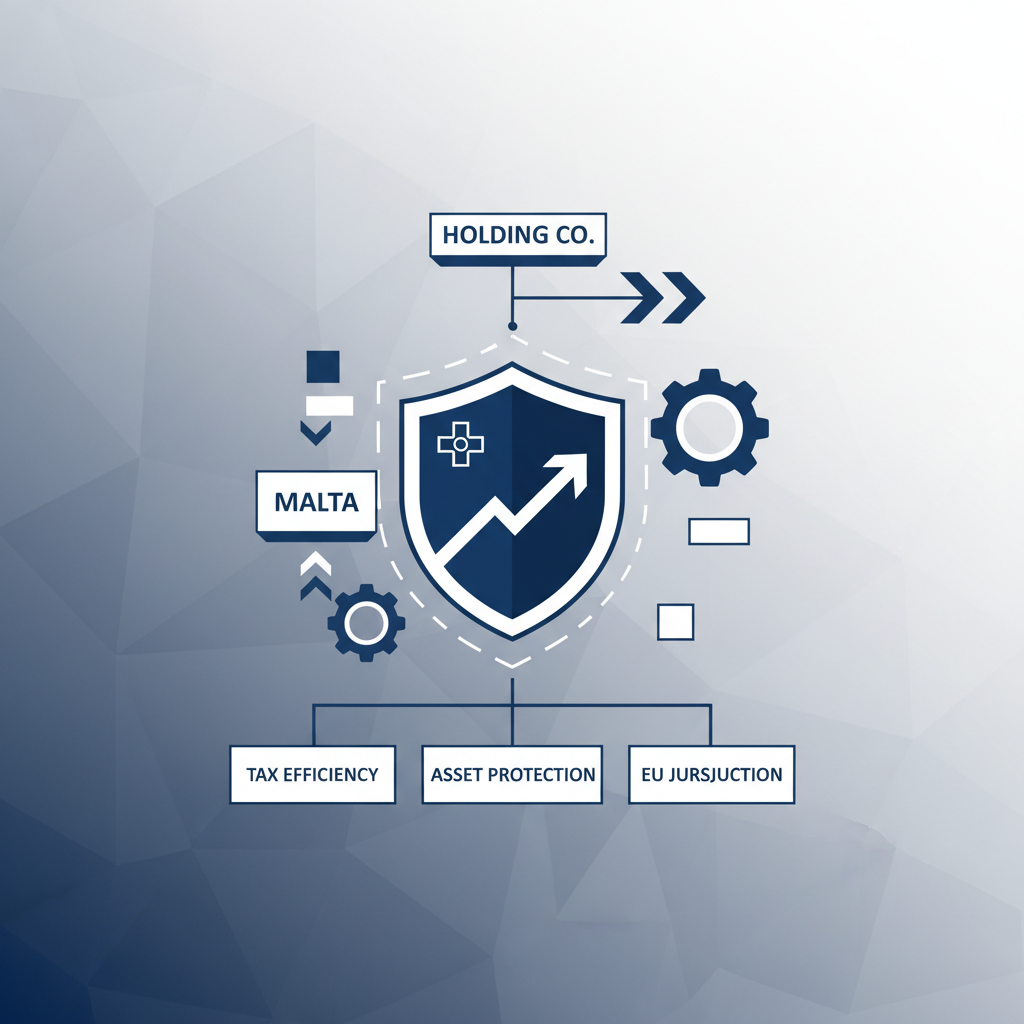
Establishing a Holding Company in Malta: Strategic Advantages and Operational Guide
Malta, a full member of the European Union, has solidified its reputation as an attractive jurisdiction for international businesses looking to establish holding companies. Its strategic geographical location, coupled with a sophisticated legal and financial infrastructure, makes it an ideal choice for consolidating assets, managing investments, and optimising tax structures. This comprehensive guide explores the multifaceted benefits of establishing a holding company in Malta and outlines the practical steps involved in the process.
Why Choose Malta for Your Holding Company?
Malta's appeal as a holding company jurisdiction stems from a combination of favourable tax laws, a robust regulatory environment, and a pro-business approach. These factors collectively create an ecosystem conducive to efficient international business operations.
Favourable Tax Regime
One of the most compelling reasons to establish a holding company in Malta is its highly attractive tax system. While the headline corporate tax rate in Malta is 35%, a unique imputation system significantly reduces the effective tax burden for shareholders.
- Full Imputation System: Under Malta's full imputation system, shareholders are entitled to a refund of a portion of the corporate tax paid by the company on distributed profits. For trading income, this typically results in a 6/7ths refund, bringing the effective tax rate down to 5%. For passive interest and royalties, a 5/7ths refund applies, reducing the effective rate to 10%. In specific cases involving certain passive income or income derived from participating holdings, a 2/3rds refund or even a full 100% refund may be applicable.
- Participation Exemption: Malta offers a robust participation exemption regime, which can lead to a 100% exemption from Maltese tax on dividends and capital gains derived from a 'participating holding'. A participating holding is generally defined as an equity holding in a company that is not a property company, where the Maltese company holds at least 5% of the equity shares, or the acquisition value exceeds €1.16 million, or the holding grants the right to appoint a director, or the holding is for the furtherance of the business of the Maltese company. This exemption is particularly attractive for multinational groups looking to repatriate profits or dispose of subsidiaries without incurring additional tax liabilities in Malta.
- No Withholding Taxes: Malta does not levy withholding taxes on dividends, interest, or royalties paid to non-resident entities, provided certain conditions are met. This is a significant advantage for international groups with complex ownership structures, facilitating efficient cross-border profit repatriation.
- Extensive Double Taxation Treaty Network: Malta boasts an extensive network of over 70 double taxation treaties. These treaties serve to prevent income from being taxed twice in different jurisdictions and often include provisions for reduced withholding tax rates on cross-border payments, further enhancing tax efficiency for Maltese holding companies.
Robust Legal and Regulatory Framework
Malta's legal system is a hybrid of civil law and common law principles, providing a stable and predictable environment for businesses. The country is a well-regarded EU member state, adhering to all EU directives and regulations, including those related to anti-money laundering (AML) and counter-terrorist financing (CTF). The Malta Financial Services Authority (MFSA) is the single regulator for financial services, ensuring high standards of governance and compliance.
Strategic Location and EU Membership
Malta's geographical position in the heart of the Mediterranean, at the crossroads of Europe, Africa, and the Middle East, offers strategic advantages for international trade and investment. Its full membership in the EU provides access to the single market and the free movement of capital, goods, services, and people, which is invaluable for businesses operating across Europe.
Skilled Workforce and Professional Services
Malta possesses a highly educated, English-speaking workforce, particularly strong in financial services, law, and accounting. The availability of experienced professionals ensures that companies can access high-quality legal, tax, and corporate services necessary for the smooth operation of a holding company.
The Process of Establishing a Holding Company in Malta
Setting up a holding company in Malta involves several key steps, from initial planning to company registration and ongoing compliance. Engaging with experienced corporate service providers is highly recommended to navigate this process efficiently.
Step 1: Planning and Structuring
Before initiating the registration process, it is crucial to define the objectives of the holding company and determine the most appropriate corporate structure. This involves:
- Choosing the Legal Form: The most common legal form for a holding company in Malta is a private limited liability company (Limited). Other options include public limited companies or partnerships, depending on specific needs.
- Share Capital Requirements: For a private limited company, the minimum authorised share capital is €1,165, of which at least 20% must be paid up. This capital can be denominated in any major currency.
- Company Name: A unique company name must be chosen and approved by the Malta Business Registry (MBR).
- Directors and Secretary: A Maltese company requires at least one director and a company secretary. While there is no requirement for directors to be resident in Malta, having local directors can be beneficial for demonstrating substance and management and control in Malta, which is crucial for tax residency purposes.
- Registered Office: Every Maltese company must have a registered office address in Malta.
Step 2: Document Preparation and Submission
Once the structure is determined, the necessary documentation must be prepared and submitted to the MBR. Key documents include:
- Memorandum and Articles of Association: These foundational documents outline the company's objectives, share capital, governance structure, and the rights and obligations of shareholders and directors.
- Shareholders' Information: Details of all shareholders, including their names, addresses, nationalities, and beneficial ownership information, are required.
- Directors' and Company Secretary's Information: Similar details for all appointed directors and the company secretary.
- Proof of Identity: Certified copies of passports and proof of address for all beneficial owners, directors, and the company secretary.
Step 3: Company Registration
Upon submission of all required documents and payment of registration fees, the MBR will review the application. If all conditions are met, the company will be registered, and a Certificate of Incorporation will be issued. This typically takes a few working days, assuming all documentation is in order.
Step 4: Post-Registration Formalities
After incorporation, several post-registration formalities need to be addressed:
- Bank Account Opening: Opening a corporate bank account in Malta is essential for the company's operations. Maltese banks are reputable and offer a range of services for international businesses. Due diligence requirements can be stringent, so it's advisable to prepare all necessary documentation thoroughly.
- Tax Registration: The company must register for a tax identification number (TIN) with the Maltese Inland Revenue Department.
- VAT Registration (if applicable): If the holding company will be engaging in taxable activities, it may need to register for VAT. Pure holding companies that only hold shares and receive dividends are generally exempt from VAT registration.
- Substance Requirements: While Malta does not impose overly burdensome substance requirements, demonstrating economic substance is increasingly important for tax residency and to avoid challenges from other tax authorities. This can include having local directors, a physical office, local employees, and conducting board meetings in Malta.
Step 5: Ongoing Compliance
Maintaining a Maltese holding company requires adherence to ongoing compliance obligations:
- Annual Returns: Companies must file annual returns with the MBR, providing updated information on directors, shareholders, and share capital.
- Audited Financial Statements: All Maltese companies are required to prepare and file audited financial statements annually with the MBR and the tax authorities.
- Tax Filings: Annual corporate income tax returns must be filed, and tax payments made in accordance with Maltese tax laws. Applications for tax refunds under the imputation system must also be submitted.
- Beneficial Ownership Register: Companies must maintain and update their beneficial ownership information with the MBR.
Costs and Timelines
The costs associated with establishing and maintaining a Maltese holding company can vary depending on the complexity of the structure and the level of professional services required. Initial registration fees are relatively modest. Professional fees for company formation, legal advice, tax planning, and ongoing compliance services (such as accounting, auditing, and company secretarial services) will constitute the bulk of the expenses.
- Registration Fees: MBR registration fees are based on the authorised share capital, starting from around €210.
- Professional Fees: Expect to budget for professional fees ranging from a few thousand euros annually for basic services to significantly more for complex structures and extensive ongoing support.
- Timeline: The company registration process itself can be completed within 3-5 working days, assuming all documentation is complete and accurate. However, the overall timeline, including bank account opening and obtaining all necessary registrations, can extend to several weeks or even a few months, particularly due to bank due diligence processes.
Conclusion
Malta presents a compelling proposition for international businesses and investors seeking to establish a holding company. Its attractive tax refund system, robust participation exemption, extensive double taxation treaty network, and lack of withholding taxes on outbound dividends make it a highly tax-efficient jurisdiction. Coupled with a stable legal and regulatory environment, EU membership, and a skilled professional services sector, Malta offers a strategic advantage for managing global assets and investments. While the process involves several steps and ongoing compliance, engaging with experienced local corporate service providers can streamline the setup and ensure adherence to all regulatory requirements, allowing businesses to fully leverage the benefits Malta has to offer. Understanding these benefits and the operational guide is crucial for making an informed decision to establish a Maltese holding company as a cornerstone of your international business strategy.


