
Dubai Company Registration: Essential Documents and Comprehensive Checklist for Business Setup
Navigating company registration in Dubai requires a thorough understanding of required documents and processes. This article provides a detailed checklist and practical insights for entrepreneurs looking to establish their business in the UAE's dynamic economic hub. We cover everything from initial approvals to final licensing, ensuring a smooth setup.
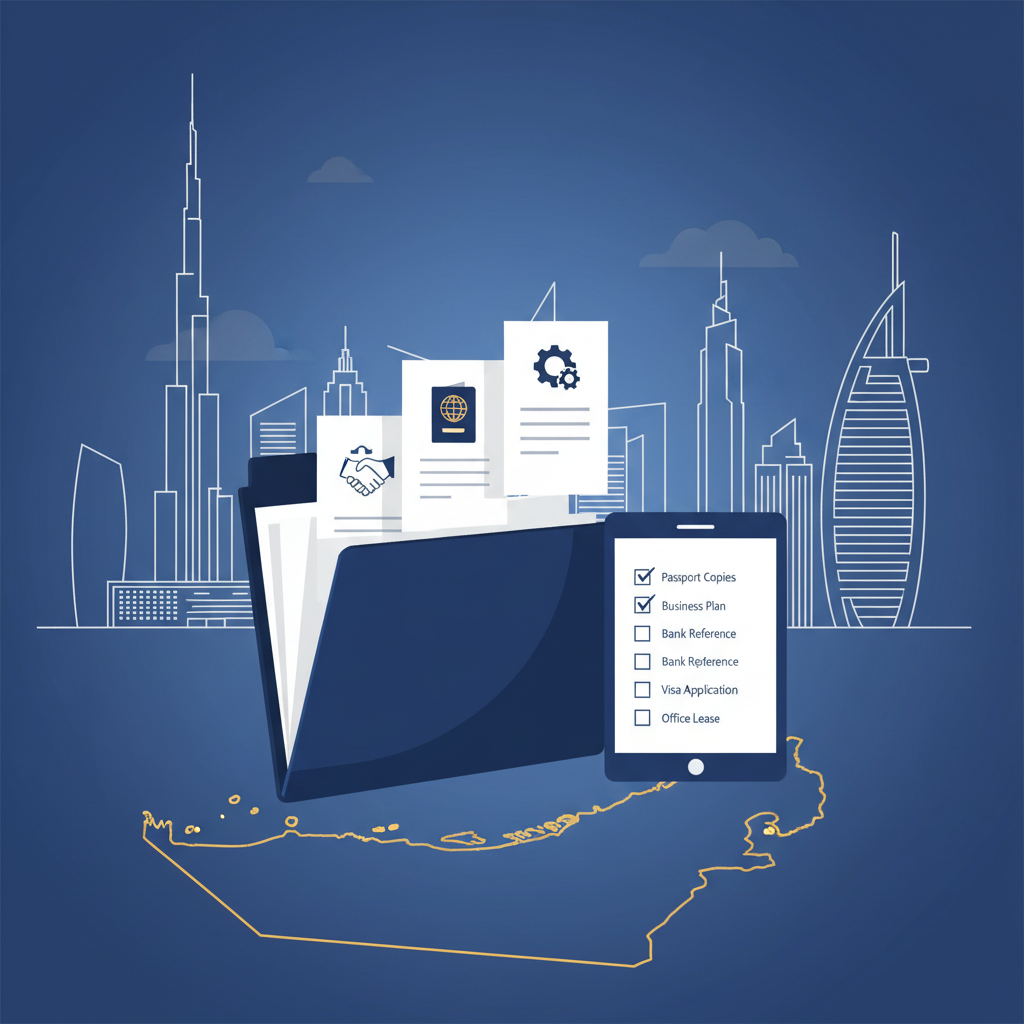
Dubai Company Registration: Essential Documents and Comprehensive Checklist for Business Setup
Dubai, a global business hub, continues to attract entrepreneurs and investors with its strategic location, tax-efficient environment, and world-class infrastructure. Establishing a company in Dubai, whether in a free zone or on the mainland, offers immense opportunities for growth and international expansion. However, the process requires meticulous preparation, particularly regarding the necessary documentation. This comprehensive guide outlines the essential documents and provides a detailed checklist to ensure a smooth and successful company registration in Dubai.
Understanding the Business Setup Landscape in Dubai
Before delving into the documentation, it's crucial to understand the two primary jurisdictions for company formation in Dubai: Mainland and Free Zones. Each offers distinct advantages and regulatory frameworks, influencing the required documents and operational scope.
Mainland Company Registration
Mainland companies, licensed by the Dubai Department of Economic Development (DED), can conduct business anywhere in the UAE and internationally. They offer maximum flexibility in terms of office location and client base. Historically, mainland companies required a 51% local Emirati sponsor, but recent reforms have allowed 100% foreign ownership in many sectors, significantly simplifying the process for international investors. The legal structures commonly chosen include Limited Liability Company (LLC), Sole Establishment, and Civil Company.
Free Zone Company Registration
Dubai's numerous free zones, such as Jebel Ali Free Zone (JAFZA), Dubai International Financial Centre (DIFC), Dubai Multi Commodities Centre (DMCC), and Dubai Internet City, are designed to promote specific industries. Free zone companies benefit from 100% foreign ownership, 100% repatriation of capital and profits, and often zero corporate and personal taxes. However, they are generally restricted from directly trading with the UAE mainland market without a local distributor or agent. Each free zone has its own independent regulatory body and specific documentation requirements, though many overlap.
General Required Documents for Company Registration in Dubai
While specific requirements can vary based on the chosen jurisdiction (mainland vs. free zone) and business activity, a core set of documents is universally requested. Preparing these in advance will significantly expedite the registration process.
For Individual Shareholders/Directors
- Passport Copy: A clear, color copy of the passport of each shareholder and director. The passport must have at least six months of validity remaining.
- Visa Copy (if applicable): If the individual is already a UAE resident, a copy of their UAE residence visa and Emirates ID.
- No Objection Certificate (NOC): For UAE residents currently employed, an NOC from their current sponsor may be required, particularly for mainland setups or if the new business activity conflicts with their existing employment.
- Curriculum Vitae (CV): A professional CV outlining educational background and work experience, especially for certain professional licenses or free zones.
- Proof of Address: A recent utility bill (electricity, water, or telephone) or a bank statement (not older than three months) confirming the residential address.
- Bank Reference Letter: Some free zones or specific business activities may request a bank reference letter from the individual's personal bank.
- Specimen Signature: Duly attested specimen signatures as required by the licensing authority.
- Passport-sized Photographs: Recent passport-sized photographs with a white background.
For Corporate Shareholders (if applicable)
If another company will be a shareholder in the new Dubai entity, the following documents are typically required:
- Certificate of Incorporation: A certified true copy of the parent company's Certificate of Incorporation or equivalent document from its country of origin.
- Memorandum and Articles of Association (MOA/AOA): Certified true copies of the parent company's constitutional documents.
- Board Resolution: A board resolution from the parent company explicitly stating the intention to establish a new entity in Dubai, appointing a representative, and outlining the shareholding structure. This document must be attested and notarized.
- Power of Attorney (POA): A notarized and attested Power of Attorney granted to the individual who will represent the parent company during the registration process in Dubai.
- Certificate of Incumbency/Good Standing: A document confirming the active status of the parent company and listing its directors and shareholders.
- Passport Copies of Directors/Shareholders of Parent Company: Similar to individual shareholders, passport copies of the ultimate beneficial owners and directors of the corporate shareholder may be requested.
Detailed Checklist for Dubai Company Registration
This checklist provides a structured approach to gathering all necessary documentation and completing the registration process.
Phase 1: Initial Planning and Name Reservation
- Business Activity Definition: Clearly define your primary business activities. This determines the type of license and jurisdiction.
- Jurisdiction Selection: Decide between Mainland and Free Zone based on your business model and market access requirements.
- Company Name Reservation: Submit three preferred company names to the relevant authority (DED for mainland, free zone authority for free zones). Ensure names comply with naming conventions (no offensive terms, no religious references, no abbreviations unless fully explained).
- Document: Application for Name Reservation.
Phase 2: Initial Approval and License Application
- Initial Approval Application: Apply for initial approval from the DED or free zone authority.
- Documents:
- Completed application form.
- Passport copies of all shareholders and directors.
- NOC (if applicable).
- CVs (if required).
- Parent company documents (if corporate shareholder).
- Documents:
- Business Plan (for certain free zones/activities): Some free zones, especially for specific industries, may require a detailed business plan outlining market analysis, financial projections, and operational strategy.
Phase 3: Legal Structure and MOA/AOA Preparation
- Drafting MOA/AOA: Prepare the Memorandum of Association and Articles of Association. For mainland companies, this is drafted in Arabic and outlines the company's objectives, share capital, and management structure. Free zones have their own standard templates.
- Documents:
- Draft MOA/AOA.
- Shareholder details (names, nationalities, share percentages).
- Authorized capital details.
- Documents:
Phase 4: Office Space and Tenancy Contract
- Office Space: Secure physical office space. This is a mandatory requirement for all company registrations in Dubai.
- For Mainland: Ejari registration (tenancy contract attested by RERA).
- For Free Zones: Lease agreement with the free zone authority or a third-party provider within the free zone.
- Document: Tenancy Contract (Ejari or Lease Agreement).
Phase 5: External Approvals (if applicable)
- Sector-Specific Approvals: Depending on your business activity (e.g., healthcare, education, finance, food and beverage), you may need additional approvals from relevant government bodies (e.g., Dubai Health Authority, Knowledge and Human Development Authority, Securities and Commodities Authority).
- Documents: Specific application forms and supporting documents as required by the respective authority.
Phase 6: License Issuance and Post-Registration
- License Fee Payment: Pay the applicable license fees to the DED or free zone authority.
- Document: Payment receipt.
- Trade License Issuance: Upon successful completion of all steps and payment, your trade license will be issued.
- Document: Original Trade License.
- Establishment Card: Obtain an Establishment Card from the General Directorate of Residency and Foreigners Affairs (GDRFA) – essential for visa processing.
- Corporate Bank Account: Open a corporate bank account with a local or international bank in Dubai. This typically requires the trade license, MOA, shareholder passports, and a board resolution.
- Visa Application: Apply for investor/employment visas for shareholders, directors, and employees.
Key Considerations and Tips
- Attestation and Legalization: Many documents originating outside the UAE, especially for corporate shareholders, will require attestation from the UAE Embassy in the country of origin and subsequent legalization by the Ministry of Foreign Affairs in the UAE. This process can be time-consuming and should be factored into your timeline.
- Professional Assistance: Engaging a reputable business setup consultant in Dubai is highly recommended. They can guide you through the intricacies, ensure all documents are correctly prepared and attested, and liaise with government authorities on your behalf, saving time and avoiding potential pitfalls.
- Timeline and Costs: The timeline for company registration can range from a few days to several weeks, depending on the jurisdiction, business activity, and completeness of documents. Costs vary significantly based on license type, jurisdiction, office space, and visa requirements.
- Ultimate Beneficial Owner (UBO) Declaration: UAE regulations now mandate the disclosure of Ultimate Beneficial Owners. Be prepared to provide detailed information on individuals who ultimately own or control the company.
- Economic Substance Regulations (ESR): Companies undertaking specific 'Relevant Activities' in the UAE must demonstrate economic substance. Understand if your business falls under ESR and ensure compliance.
Conclusion
Registering a company in Dubai is a strategic move for any business aiming for regional and international success. While the process involves a series of steps and a substantial amount of documentation, a clear understanding of the requirements and meticulous preparation can streamline the journey. By utilizing this comprehensive checklist and considering professional guidance, entrepreneurs can confidently navigate the regulatory landscape, ensuring compliance and laying a strong foundation for their ventures in the vibrant economy of Dubai. The commitment to transparency and ease of doing business in Dubai continues to evolve, making it an increasingly attractive destination for global enterprises. Proper documentation is not just a formality; it is the cornerstone of a legally sound and successful business operation in the UAE.


